Info
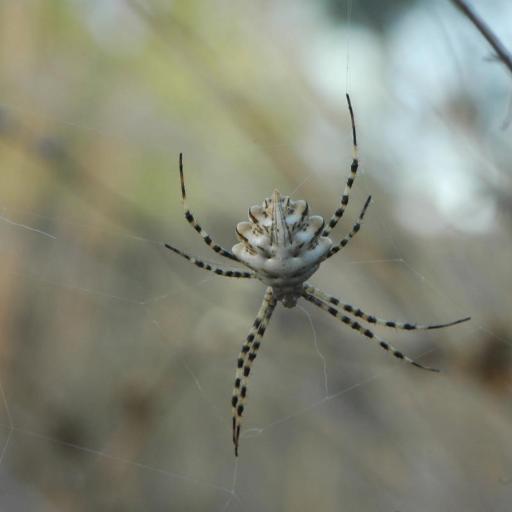
The Lobed Argiope is a master architect of the dry scrublands, looking more like a piece of hand-carved silver jewelry than a typical garden spider. Often called the "Lobed Zigzag Spider," it is famous for its distinctively "scalloped" body shape and its habit of sitting dead-center in a massive, shimmering web. While its jagged appearance might seem alien or threatening, it is one of the most beneficial predators a sunny garden can have.
🔍 How to Identify
- 🕸️ The Sculpted Abdomen: Unlike most spiders with smooth, round bodies, this species has deep, irregular lobes or "teeth" along the edges of its abdomen, giving it a jagged, star-like silhouette.
- 🥈 Silver Shielding: The top of the body is often covered in dense, silvery-white hairs that glisten in the sun. This helps the spider reflect heat and stay cool in exposed areas.
- 🎨 The Zigzag Signature: It often weaves a thick, prominent zigzagging ribbon of silk (called a stabilimentum) into the center of its web, which may help warn birds to stay away or attract insect prey.
🌲 Habitat & Ecology
- 🦗 The Grasshopper Hunter: This spider is a heavy-duty predator, specifically building its web low to the ground to catch large, powerful jumping insects like grasshoppers and crickets that other spiders might avoid.
- ☀️ Arid Specialist: You’ll rarely find them in damp, shady forests. They thrive in hot, open heaths, coastal dunes, and dry grasslands where the sun hits directly for most of the day.
⚠️ Safety & Toxicity
- 🕷️ Gentle Giant: Despite its fierce and "spiky" look, the Lobed Argiope is extremely shy. It would much rather drop from its web and hide in the grass than confront a human.
- 🩹 The Bite: It is venomous to insects but poses very little threat to humans. If forced to bite (by being squeezed or stepped on), the sensation is typically no worse than a mild bee sting, resulting in slight redness or swelling.
✨ Fun Fact
The silvery "armor" on its back is a biological heat-shield! It acts as a high-tech solar reflector, bouncing back intense UV rays to prevent the spider’s internal organs from overheating while it sits exposed in the midday sun.
More Details








