Info
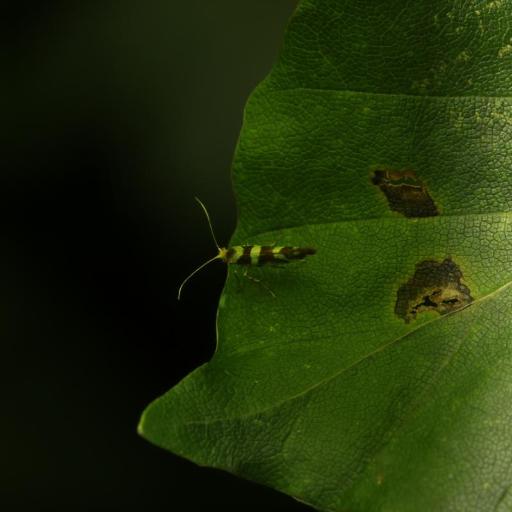
Known as the Birch Ermine or the Gold-dotted Argent, this tiny micro-moth looks like a microscopic piece of jewelry dropped onto a leaf. It is a common resident of woodlands and gardens across Europe and parts of Asia, where it lives a quiet life tied closely to the life cycle of birch trees. Despite its small stature, its shimmering, metallic wings make it a standout discovery for any keen-eyed nature lover.
🔍 How to Identify
- 🦋 Wings: The forewings are a striking metallic bronze or deep gold, interrupted by bold, creamy-white or silver patches that look like inlaid marble.
- 📐 Resting Posture: This moth has a very peculiar way of sitting; it rests at a steep angle, almost as if it is performing a "headstand" on the leaf with its tail pointed toward the sky.
- 📏 Size: It is exceptionally small, with a wingspan of only 9 to 12 millimeters, often requiring a magnifying glass to appreciate its intricate patterns.
🌲 Habitat & Ecology
- 🌳 The Birch Connection: You will almost always find this insect near Birch (Betula) or Alder (Alnus) trees. The larvae spend their winter tucked away inside the catkins or young shoots of these trees, emerging in early summer.
- 🌙 Flight Period: The adults are most active from June to August. While they fly primarily at night, they are easily flushed from tree branches during the day, where they catch the sunlight and glimmer as they flutter to a new hiding spot.
⚠️ Safety & Toxicity
- ✅ Status: Entirely harmless. This moth does not bite, sting, or possess any irritant hairs.
- 🐦 Ecological Role: Rather than being a pest, it serves as a "friend" to the garden ecosystem by providing a high-protein snack for small songbirds and predatory insects during the summer months.
✨ Fun Fact
- 🏛️ Silver Garments: Its scientific name, Argyresthia, is derived from the Greek words for "silver" and "garment"—a poetic nod to the moth’s shimmering, metallic appearance that resembles a tiny cloak of precious metals.
More Details








