Info
Often called the Cherry Fruit Moth, this tiny lepidopteran is a frequent visitor to backyard orchards and woodland edges. While its metallic sheen and delicate patterns are quite beautiful to the keen observer, gardeners often view it as a "frenemy" due to its appetite for developing fruit. In the world of micro-moths, it is a master of disguise, blending perfectly into the bark of fruit trees when at rest.
🔍 How to Identify
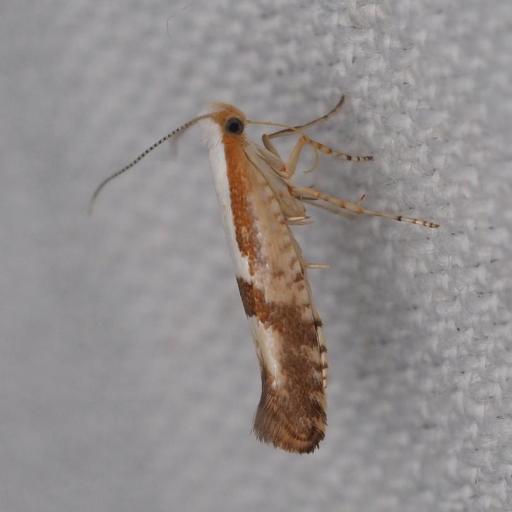
- 🦋 Wing Pattern: The forewings are a warm bronze-brown, featuring a distinct white stripe along the inner edge and a dark, diagonal band that looks like a tiny saddle across the middle.
- ❄️ The White "Toupée": This moth is easily spotted by the dense tuft of white scales on its head, giving it a somewhat distinguished, snowy-capped appearance.
- 📐 The Pose: Unlike many moths that lay flat against a surface, Argyresthia pruniella rests at a steep 45-degree angle, making it look like it is performing a tiny headstand on the leaf or twig.
🌲 Habitat & Ecology
- 🍒 The Orchard Dweller: As its name suggests, this moth is inextricably linked to Prunus species. You’ll find them wherever cherries, plums, or blackthorns are growing, from suburban gardens to commercial orchards.
- 🐛 The Bud Raider: The real drama happens in the early spring when the larvae emerge. They bore directly into the flower buds and young fruit, causing the developing cherries to shrivel and fall—a process often frustrating to home growers known as "fruit drop."
- 🌑 Night Moves: The adults are primarily nocturnal and are frequently drawn to garden light traps, though they spend their days hiding quietly on the undersides of leaves or tucked into bark crevices.
⚠️ Safety & Toxicity
- 🛡️ Harmless Resident: This insect is completely harmless to humans and pets. It does not bite, sting, or carry any diseases that affect mammals.
- 🍎 Crop Impact: While safe for people, it is considered a minor pest in the agricultural sense. If you have a cherry tree, a high population of these moths might mean a smaller harvest for you, but they pose no threat to your physical safety or your pets.
✨ Fun Fact
The genus name Argyresthia comes from the Greek words for "silver" and "garment," a tribute to the shimmering, metallic quality of their tiny wings that glisten like silver thread when caught in the morning sun.
More Details








