Info
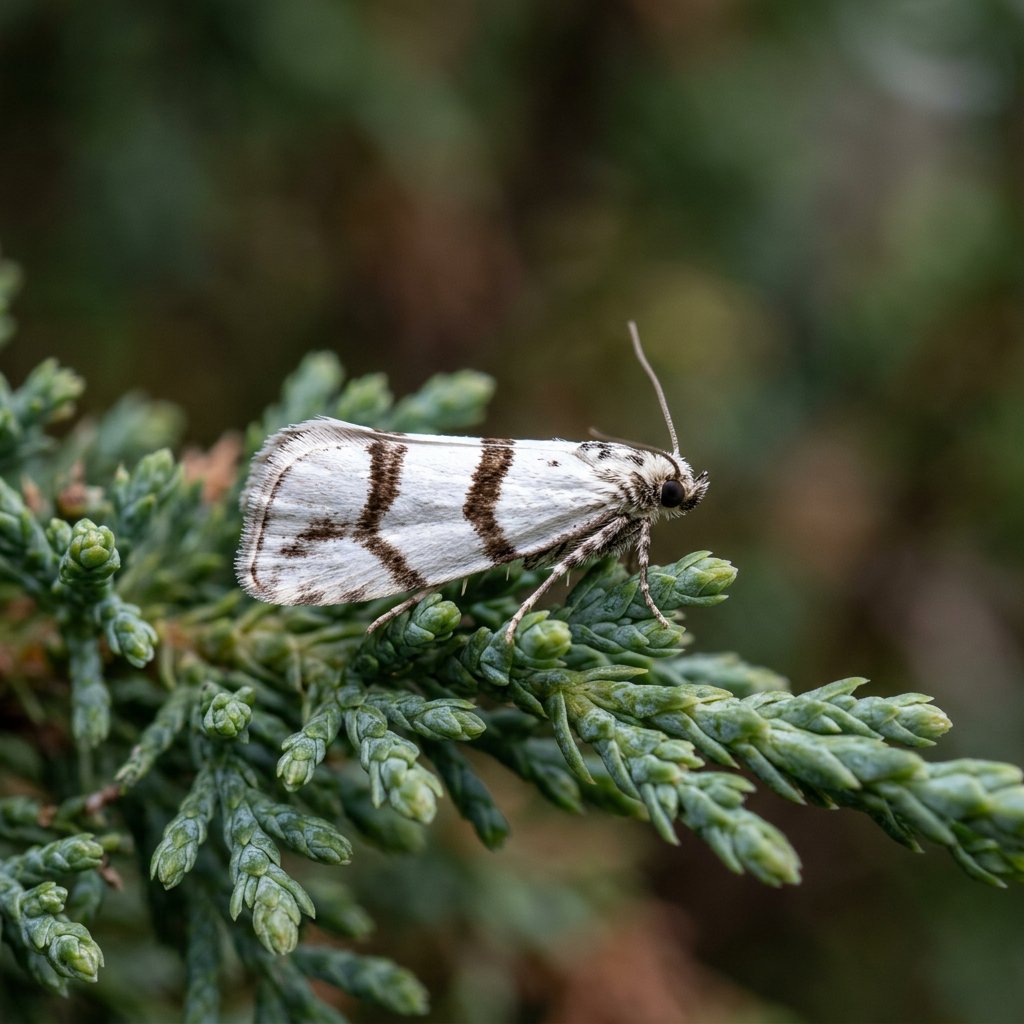
Known as the Juniper Ermine Moth or the Cypress Tip Moth, this tiny insect is a master of disguise and a frequent uninvited guest in suburban gardens. While the adult moth looks like a shimmering piece of jewelry with its metallic gold and white bands, it is often considered a "foe" by gardeners who prize their evergreen hedges. Its life begins as a tiny miner, carving out a home inside the tips of cypress and juniper needles.
🔍 How to Identify
- 🦋 The Wings: The moth features a striking base of golden-bronze or coppery-brown, interrupted by three distinct, vertical white bands (hence the name trifasciata).
- 📏 The Size: It is a "micro-moth," incredibly small with a wingspan of only about 7–10 millimeters. You are more likely to see them fluttering like dust motes around your hedges in the early summer.
- 📐 Resting Posture: Like many ermine moths, it sits at a steep angle to the surface it’s resting on, often looking more like a tiny thorn or a piece of debris than a living insect.
🌲 Habitat & Ecology
- 🍽️ Dietary Habits: The larvae are specialists that feed exclusively on the foliage of Cupressaceae plants, including Junipers, Thuja (Arborvitae), and Leylandii. They tunnel into the young shoots, which causes the tips of the branches to turn brown and die back.
- 🏠 Garden Impact: If you notice your cedar or juniper hedge looking "scorched" or brown at the very tips in late spring, it is likely the work of this moth's larvae. They spend the winter safely tucked inside the leaves before emerging as adults in May or June.
⚠️ Safety & Toxicity
- ✅ Harmless to Humans: The Juniper Ermine Moth is completely non-toxic. It does not bite, sting, or carry diseases that affect humans or pets.
- 🛡️ Plant Health: While it won't hurt you, a heavy infestation can make ornamental conifers look ragged and unsightly. However, the damage is usually cosmetic and rarely kills a well-established tree.
✨ Fun Fact
This moth is a relatively recent "invader" in many parts of Northern Europe and the UK; it was originally native to the Mediterranean but spread rapidly across the continent starting in the 1980s, likely hitching rides on plants sold in the international garden center trade!
More Details








