Info
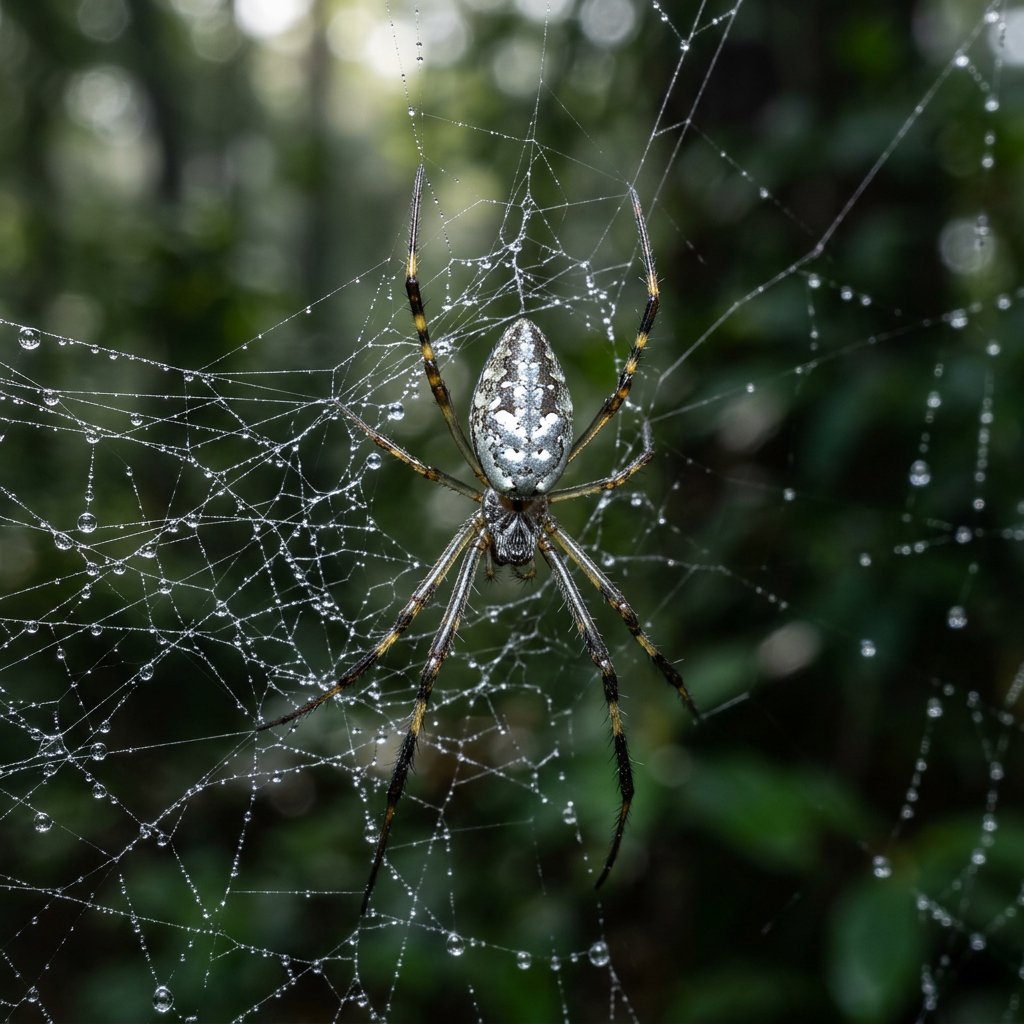
Often mistaken for a stray bead of mercury or a glint of sunlight trapped in a web, the Silver Dewdrop Spider is a tiny, glittering opportunist. Unlike most spiders, it rarely builds its own web, choosing instead to live as a "professional thief" inside the massive webs of larger spiders. Its name comes from its strikingly high, metallic abdomen that shines brilliantly against the green of a garden.
🔍 How to Identify
- 💎 The Abdomen: The most striking feature is its highly reflective, silvery abdomen, which is shaped like a tall cone or a pyramid. It looks more like a piece of jewelry than a living creature.
- 📏 Miniature Size: These spiders are incredibly small, usually only 3 to 4 millimeters long. They are easily overlooked by the casual observer unless they catch the light just right.
- 🕷️ Slender Legs: Their legs are dark, thin, and often held close to the body when resting, which helps them mimic a harmless seed or a drop of water.
🌲 Behavior & Ecology
- 🍕 The Web Burglar: This spider is a "kleptoparasite." It hangs out on the outskirts of a larger spider’s web (usually an Orb Weaver) and rushes in to steal tiny insects that the host ignores, or even nabs a portion of the host’s own meal.
- 🧶 Stealth Tactics: They are masters of vibration. They can move across another spider’s web so delicately that the host never feels their presence, effectively remaining "invisible" to the much larger predator they live with.
- 🏠 Common Hosts: You will most likely find them in the sprawling webs of Golden Silk Orb Weavers or common garden spiders, tucked away in the corner of the silk structure.
⚠️ Safety & Toxicity
- ✅ Harmless: The Silver Dewdrop Spider is completely harmless to humans and pets. They are not aggressive and have no interest in anything larger than a fruit fly.
- 👄 Tiny Mandibles: Their mouthparts are far too small to pierce human skin. Even if you were to handle one, it would likely just try to tuck its legs in and look like a piece of debris to hide from you.
✨ Fun Fact
To avoid being eaten by their host, the Silver Dewdrop Spider will sometimes "cut" the silk lines of the host’s web to isolate a piece of prey, making a "clean break" with their stolen dinner before the web's owner realizes what happened!
More Details








