Info
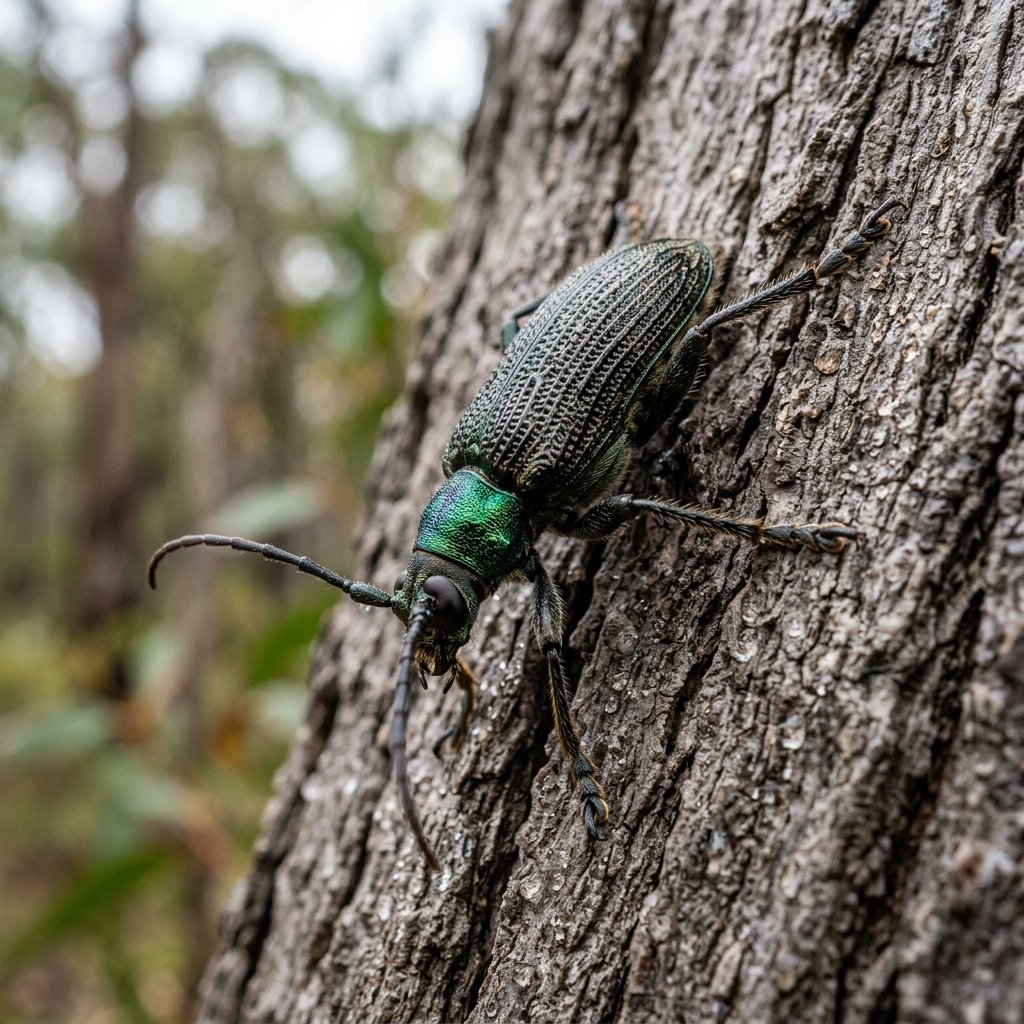
Known as the Tiger Longicorn Beetle, this striking insect is a master of disguise and a common sight in Australian woodlands and gardens. With its vibrant orange and black banding, it is often mistaken for a wasp at first glance—a clever evolutionary trick designed to keep predators at bay. While their larvae are wood-borers, the adults are gentle nectar-feeders that play a quiet role in local pollination.
🔍 How to Identify
- 🎨 Tiger Stripes: The most recognizable feature is the bold, alternating pattern of bright orange-yellow and deep black across its wing covers (elytra).
- 📡 Sweeping Antennae: True to its "Longicorn" name, it possesses exceptionally long, segmented antennae that curve backward, often exceeding the length of its own body.
- ✈️ Wasp-like Shape: Its body is slender and elongated, and when it flies, its movement mimicry is so convincing that many birds (and humans) give it a wide berth.
🌲 Habitat & Ecology
- 🌸 Flower Frequenters: You are most likely to spot an adult Tiger Longicorn during the day, clinging to the blossoms of Eucalyptus, Angophora, or Wattles as they forage for nectar and pollen.
- 🍂 Nature’s Recycler: The larvae, known as "round-headed borers," live inside the wood of fallen logs or stressed trees. They help break down tough cellulose, returning vital nutrients to the soil.
- 🏡 Garden Presence: In suburban areas, they are often drawn to citrus trees or dead wood piles, where their life cycle begins in the shadows of the bark.
⚠️ Safety & Toxicity
- 🛡️ Harmless Mimic: Despite its "warning" colors, the Tiger Longicorn is non-venomous and possesses no stinger. It relies entirely on its looks to stay safe.
- 🦷 Mechanical Nip: While not aggressive, they have strong mandibles designed for chewing through wood. If handled roughly, they may deliver a small, non-toxic pinch to defend themselves.
- 🐾 Pet Safety: They are generally harmless to curious pets, though the hard exoskeleton can be a bit crunchy if accidentally swallowed.
✨ Fun Fact
The Tiger Longicorn Beetle doesn't just look like a wasp; it "sounds" like a threat too! When disturbed, it can produce a faint, high-pitched squeaking sound by rubbing its body parts together, a process called stridulation intended to startle attackers.
More Details








