Info
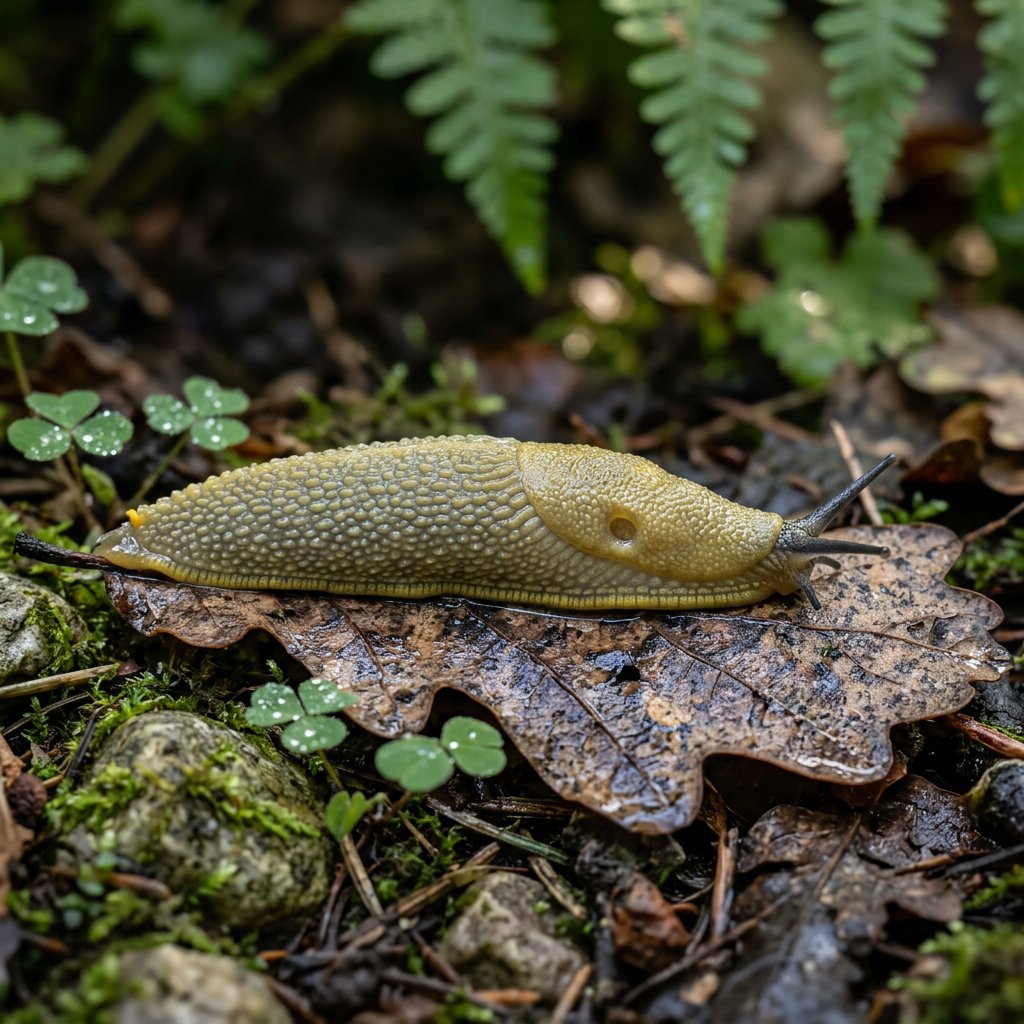
Meet the Hedgehog Slug, a tiny, slow-moving wonder of the damp undergrowth. Often overlooked due to its miniature size, this slug gets its whimsical name from the way its skin "prickles" up when it feels threatened. Unlike its larger, hungrier cousins that might devour your prized hostas, this little yellow-tinged crawler is a gentle decomposer that plays a vital role in the garden's ecosystem.
🔍 How to Identify
- 🦔 The "Prickles": When the slug contracts its body, its skin texture transforms into pointed, cone-shaped bumps (tubercules) that mimic a hedgehog's spines.
- 🎨 Coloring: It is typically a pale creamy-yellow or greyish-white, often featuring a distinctly bright yellow or orange "sole" (the underside it crawls on).
- 📏 Miniature Stature: This is one of the smaller slug species, rarely growing larger than 2 centimeters (less than an inch) in length.
🌲 Habitat & Ecology
- 🍄 Dietary Preferences: This species is a specialized feeder, preferring fungi and decaying organic matter over fresh garden plants. It acts as a natural recycler, turning old leaves into soil.
- 🍂 Moisture Seeker: Because it dries out easily, it is most active at night or during rainy weather. During the day, it hides deep within leaf litter, under damp logs, or at the base of tufted grasses.
⚠️ Safety & Toxicity
- 🟢 Status: Completely harmless to humans. It does not bite, sting, or possess any toxic secretions that affect skin.
- 🐶 Pet Safety: While the slug itself isn't toxic, all slugs can potentially carry parasites (like lungworm) if eaten by dogs or cats. It is best to keep curious pets from snacking on them during damp evening walks.
✨ Fun Fact
When the Hedgehog Slug is resting or feels a vibration, it doesn't just pull in its tentacles—it scrunches its entire body into a tiny ball, making its "spines" stand out so prominently that it looks more like a piece of serrated fruit or a tiny sea anemone than a slug!
More Details








