Info
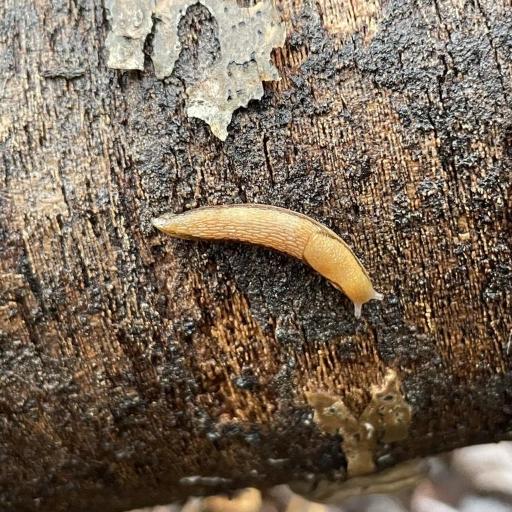
Known as the Dusky Slug, Arion subfuscus is a common resident of damp gardens and forest floors. While often mistaken for an insect or "bug," it is actually a terrestrial gastropod mollusk. This slug is famous among naturalists for its warm, sunset-hued colors and its remarkably sticky, vibrant slime that can leave a lasting impression on anyone who picks it up.
🔍 How to Identify
- 🐌 Color Palette: Its body is usually a shade of rusty orange, yellowish-brown, or dusky grey, often featuring two darker longitudinal bands running along its sides.
- 🧡 Tell-tale Slime: If gently prodded, it secretes a thick mucus that is characteristically yellow or bright orange—a key feature that distinguishes it from many other slug species.
- 🛡️ The Mantle: The front "shield" (mantle) covers about a third of its body length, and its breathing hole (pneumostome) is located toward the front-right side of this shield.
🌲 Habitat & Ecology
- 🍂 Nature’s Recycler: These slugs are generalist scavengers. They play a crucial role in the ecosystem by consuming decaying leaves, fungi, and algae, effectively "cleaning" the forest floor and recycling nutrients back into the soil.
- ☁️ Humidity Lover: Because they lack a shell to retreat into, they are highly sensitive to drying out. You will find them most active at night or on overcast, rainy days, hiding under logs and leaf litter when the sun is high.
⚠️ Safety & Toxicity
- 🧼 Low Risk: The Dusky Slug is not venomous and does not bite. However, their slime is notoriously difficult to wash off and can act as a mild irritant to sensitive skin.
- 🦠 Hygiene Warning: Like all mollusks, they can carry parasites such as lungworm. It is important to prevent pets from eating them and to always wash your hands thoroughly after handling one.
✨ Fun Fact
When a Dusky Slug feels threatened, it doesn't just crawl away; it can contract its body into a tight, bell-shaped semi-circle, making itself a much tougher and more slippery target for a hungry bird or beetle!
More Details








