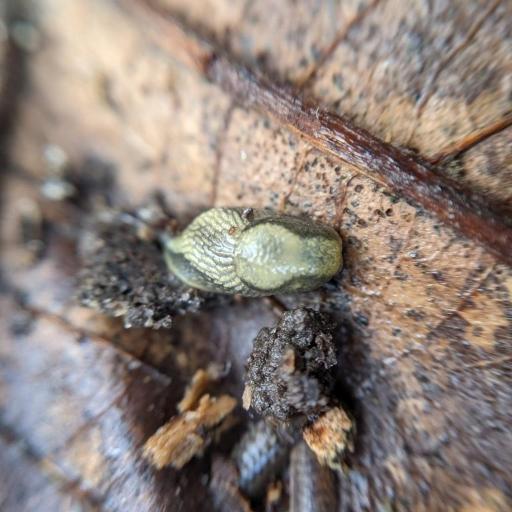
Info
Known across Europe as the "Spanish Slug" or even the "Killer Slug," Arion vulgaris is one of the most successful and notorious garden invaders. While it may look like a slow-moving blob, this creature is a voracious eater with a reputation for being nearly indestructible. Folklore often paints them as the villains of the vegetable patch, capable of appearing in hundreds overnight after a warm rain.
🔍 How to Identify
- 🐌 Color Palette: They range from deep brick-red and bright orange to a dull, muddy brown or olive green. They lack the stripes often seen on other large slug species.
- 📏 Size & Shape: These are "large" slugs, often stretching to 10–15 cm when fully extended. When threatened, they pull themselves into a rounded, bell-shaped lump.
- 🕳️ The Breathing Hole: Look for the pneumostome (breathing hole) on the right side of the mantle, located specifically towards the front half of the body.
- 💧 Slime Texture: They produce a thick, sticky, yellowish mucus that is notoriously difficult to wash off skin or garden tools.
🌲 Habitat & Ecology
- 🥗 The "Killer" Diet: Unlike many slugs that prefer decaying matter, the Spanish Slug loves fresh green plants. They earned their "killer" nickname because they are also known to eat dead animals, dog waste, and even other slugs.
- 🥚 Prodigious Breeders: They are hermaphrodites and can lay up to 400 eggs in a single season. Their ability to outcompete and even interbreed with local slug species has allowed them to dominate ecosystems rapidly.
- 🌦️ Moisture Seekers: You’ll find them hiding under pots, logs, or deep in tall grass during the day, emerging at dusk or during damp, overcast weather to feed.
⚠️ Safety & Toxicity
- 🐕 Pet Danger: While not venomous, these slugs can carry the larvae of Angiostrongylus vasorum (Rat Lungworm). If a dog accidentally eats a slug or licks slime off a toy, it can lead to serious respiratory and neurological issues.
- 👐 Skin Irritation: The mucus isn't toxic but is incredibly adhesive. It’s best to wear gloves when moving them to avoid a sticky mess that soap and water struggle to remove.
- 🌱 Garden Threat: They are a major threat to biodiversity and food crops. They have few natural predators because their thick slime makes them unpalatable to many birds and hedgehogs.
✨ Fun Fact
The Spanish Slug is so hardy that it can survive eating toxic fungi that would kill other animals, and it has even been observed attacking and eating defenseless bird chicks in ground-nesting species!
More Details








