Info
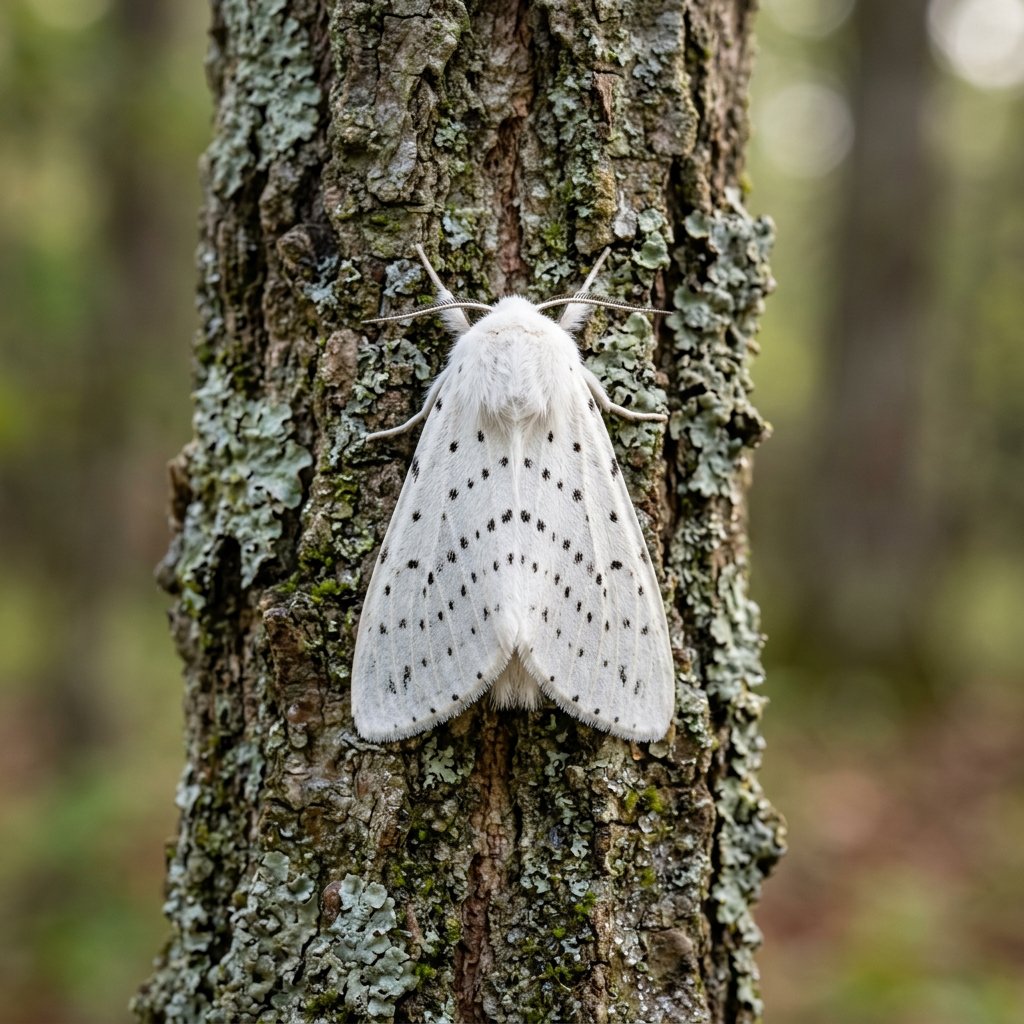
Often called the Dot-lined White Moth, this insect looks like a tiny, elegant polar bear that has wandered into your garden. Shrouded in a coat of dense, snowy "fur," it is a frequent visitor to porch lights across North America. While its ghostly white appearance might seem eerie to some, it is a harmless and fascinating member of the Lappet moth family.
🔍 How to Identify
- ❄️ The Wings: Broad, pristine white forewings decorated with several neat, transverse rows of small black dots. When resting, they hold their wings in a roof-like position over their bodies.
- 🧥 The "Parka": An exceptionally fuzzy thorax and head. This thick coating of specialized scales gives the moth a woolly, soft appearance.
- 📡 The Antennae: Distinctly feathery (bipectinate) antennae, which are much larger and more "combed" in males to help them detect female pheromones from a distance.
🌲 Habitat & Ecology
- 🌳 The Nursery: As caterpillars, they are masters of camouflage, mimicking the bark of their host trees. They primarily feed on the leaves of oaks, cherries, and roses, though they rarely occur in high enough numbers to cause significant damage to the plant.
- 🌙 Night Owls: You are unlikely to see them active during the day. They are strictly nocturnal and are famous for their "statue-like" behavior; once they land near a light source, they may remain perfectly still for hours, even if gently nudged.
⚠️ Safety & Toxicity
- ✅ Harmless Adult: The adult Dot-lined White Moth is completely safe. It does not bite, sting, or carry any toxins that affect humans or pets.
- 🐛 Caterpillar Caution: While not as "stinging" as some of its relatives, the caterpillars possess fine hairs that can cause mild skin irritation or a "prickly" sensation in sensitive individuals. It is best to observe the larvae without picking them up.
✨ Fun Fact
The thick "fur" on the moth's body isn't just for warmth; it acts as acoustic insulation. This fuzz can help absorb the ultrasonic pings of hunting bats, making the moth harder to detect in the dark—essentially acting like a biological stealth suit!
More Details








