Info
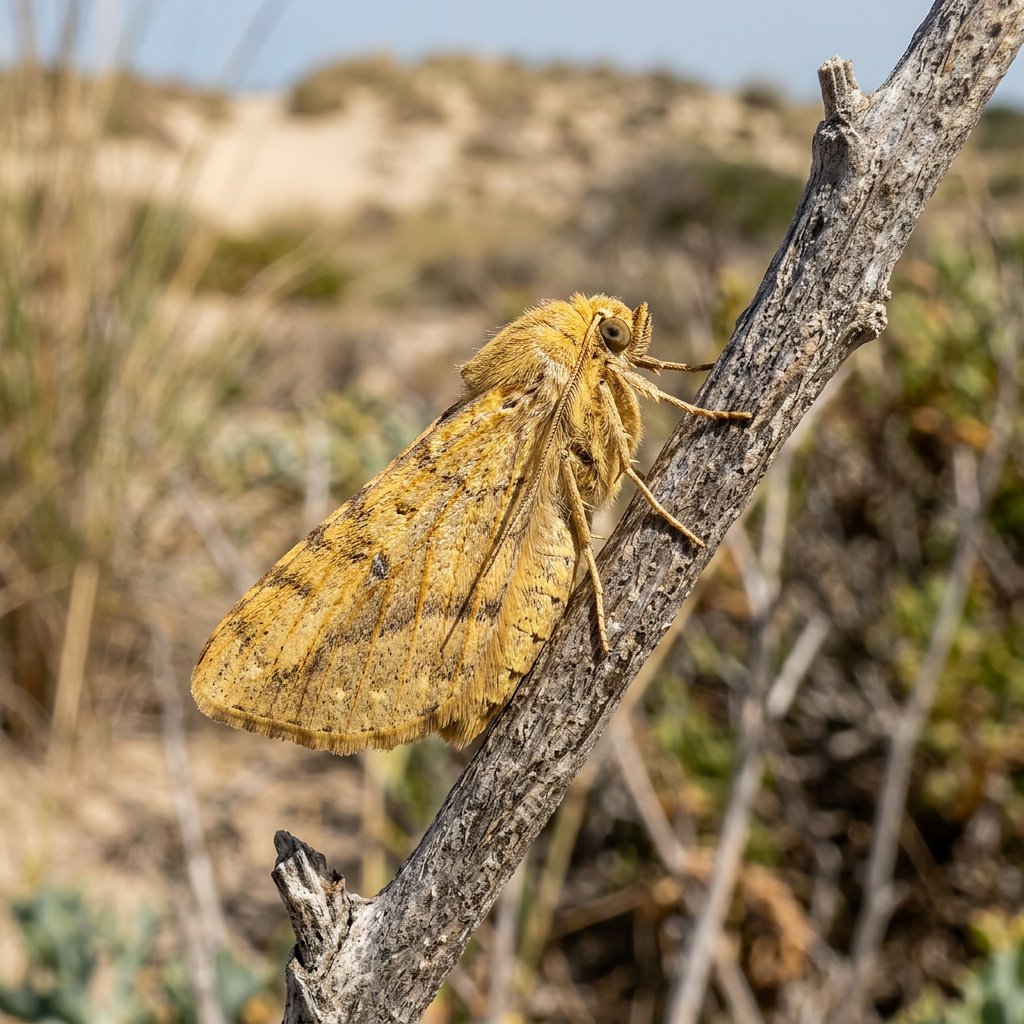
Known as the Yellow Belle, this sun-loving moth is a frequent sight in dry, coastal meadows and chalky grasslands. Unlike many of its nocturnal cousins, the Yellow Belle thrives in the heat of the day, fluttering through tall grasses with a distinct, jerky flight that often leads observers to mistake it for a small butterfly.
🔍 How to Identify
- 🎨 Wing Color: The wings are a beautiful straw-yellow or ochre, often dusted with tiny dark scales that give it a textured, "sandy" look.
- 📏 The Twin Lines: Look for two prominent, slightly wavy brownish lines crossing the forewings—these are its most defining marking.
- 📐 Resting Posture: It typically rests with its wings spread out flat or held in a shallow "V" shape, pressed tightly against a stem or leaf to blend in.
🌿 Habitat & Ecology
- 🍽️ Larval Diet: The caterpillars are specialists, munching on low-growing wild plants like Wild Thyme, Bird’s-foot Trefoil, and various species of clover.
- ☀️ Sun Seeker: This moth is most active in bright sunshine. If you walk through a dry field in late spring or late summer, you’ll likely see them disturbed from the grass, flying a short distance before diving back into cover.
- 🌍 Coastal Preference: While found inland, they have a strong preference for coastal dunes and salt marshes where the soil is well-drained and the sun is intense.
⚠️ Safety & Toxicity
- ✅ Harmless: The Yellow Belle is a "friend" of the garden. It possesses no sting, no bite, and is not known to be toxic.
- 🐾 Pet & Child Safe: Because it does not produce irritating hairs or carry venom, it is perfectly safe to observe closely with curious children or pets.
✨ Fun Fact
The Yellow Belle belongs to the Geometridae family. The name "Geometer" literally means "earth-measurer"—a tribute to the way their caterpillars (inchworms) move by looping their bodies, looking as if they are carefully measuring the ground as they walk!
More Details








