Info
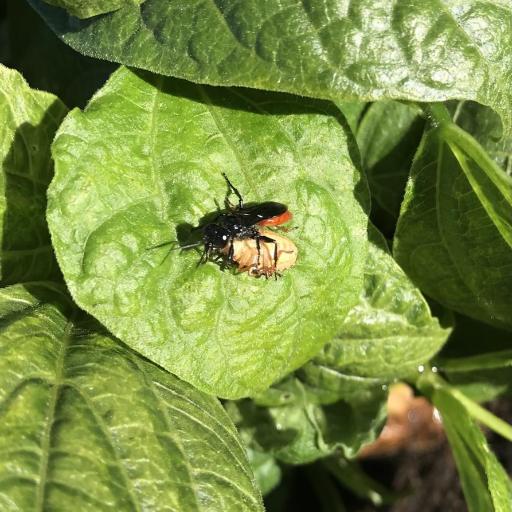
Often called the "Stink Bug Hunter," the Astata wasp is a silent guardian of your vegetable patch. While their buzzing flight might catch your attention, these solitary wasps are focused on one mission: clearing your garden of crop-destroying pests. They are the ultimate "good guys" of the insect world, acting as a natural, chemical-free pesticide for your backyard.
🔍 How to Identify
- 👀 The "Goggle" Eyes: Males have enormous, wrap-around eyes that almost touch at the top of their heads, giving them an alien-like appearance and incredible 360-degree vision.
- 🔴 The Crimson Patch: Many species feature a striking red or rusty-orange band across the middle of their abdomen, which stands out against their otherwise dark, sturdy body.
- 🛡️ Robust Build: Unlike the thin, "thread-waisted" wasps you might see, Astata has a compact, powerful body designed for carrying heavy prey through the air.
🌲 Habitat & Ecology
- 🚜 The Shield-Bug Specialist: These wasps are elite predators of Pentatomidae (stink bugs). They paralyze the bugs with a precise sting and carry them back to their underground nurseries to feed their larvae.
- 🏖️ Sun & Sand: You will most likely find them in sunny, open areas with loose or sandy soil. They are expert excavators, digging deep vertical burrows to protect their offspring.
- 🌸 Sugar Rush: While the babies eat protein, the adults are peaceful pollinators who spend their afternoons sipping nectar from shallow flowers like Wild Carrot or Yarrow.
⚠️ Safety & Toxicity
- 🐝 Low Threat Level: Because they are solitary and do not have a hive to defend, Astata wasps are incredibly docile and have zero interest in humans or pets.
- 🧤 Handling: A female can sting if she is squeezed or stepped on, but the sensation is mild compared to a hornet. They are generally considered safe to have around children and curious dogs.
✨ Fun Fact
Male Astata wasps are the ultimate "sentries." They pick a specific leaf or stone as a lookout post and will spend hours darting out to chase away rivals or inspect anything that flies into their territory—including falling leaves!
More Details








