Info
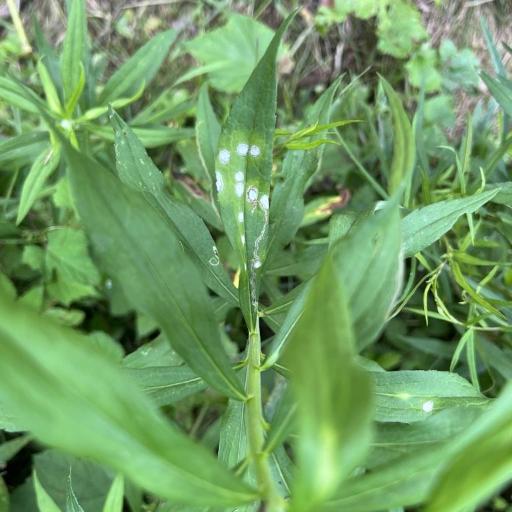
Often referred to as the Goldenrod Gall Midge, this tiny architect is responsible for those mysterious, carbon-black spots you might see on goldenrod leaves. While it looks like a simple smudge of soot, it is actually a complex "neighborhood" built through a unique partnership between an insect and a fungus. In the world of garden ecology, it is a fascinating example of how nature collaborates to create a home.
🔍 How to Identify
- ⚫ The "Carbon" Gall: The most obvious sign is a flat, circular, jet-black blister on the leaves of goldenrod plants. It looks like a drop of tar or a burnt spot, which gives the species its name (carbonifera).
- 🪰 The Adult Midge: The actual fly is minuscule—barely a few millimeters long—with a delicate, slender body and long legs, typical of the "gall midge" family. You are much more likely to see the gall than the fly itself.
- 🐛 Hidden Larvae: If you were to carefully peel back the black crust of a fresh gall, you might find a tiny, translucent-to-orange larva resting inside a soft white fungal bed.
🌲 Habitat & Ecology
- 🌿 Goldenrod Specialist: This insect is almost exclusively found where Solidago (Goldenrod) species grow. It doesn't travel far from its host plant, making it a common sight in meadows, prairies, and wilder backyard corners.
- 🍄 A Fungal Partnership: Unlike most insects that build galls alone, this midge "farms" a specific fungus (Botryosphaeria dothidea). The midge larvae feed on the fungus, and the fungus creates the hard, black structure that protects the larvae from predators and the elements.
- 🛡️ Ecosystem Role: While they use the plant’s nutrients, they rarely cause enough damage to kill the goldenrod. They serve as a vital food source for specialized parasitic wasps that hunt the larvae through the black crust.
⚠️ Safety & Toxicity
- ✅ Harmless: The Asteromyia Carbonifera is completely harmless to humans and pets. It does not bite, sting, or carry diseases.
- 🌱 Plant Health: While the black spots might look alarming to a gardener, they are purely aesthetic. They won't spread to your vegetables or rose bushes, as the midge is a specialist that only likes goldenrods.
✨ Fun Fact
This insect is essentially a traveling farmer! Female midges carry the spores of their partner-fungus in a specialized pouch. When she lays her eggs on a leaf, she "seeds" the plant with the fungus, ensuring her offspring will have both a house and a meal ready when they hatch.
More Details








