Info
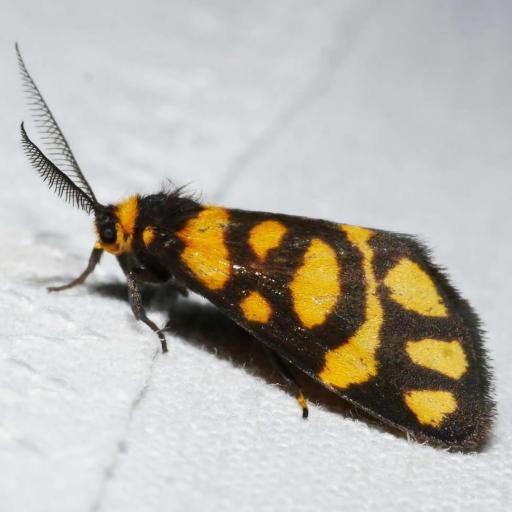
Often called the Lichen Moths, members of the Asura genus are like tiny, fluttering pieces of stained glass. These vibrant insects are famous for their bold, high-contrast patterns that act as a visual "stop sign" to predators. While many moths are dull and brown to hide in the shadows, the Asura embraces a flamboyant wardrobe of oranges, reds, and blacks to signal that they are not a tasty snack.
🔍 How to Identify
- 🦋 Graphic Wings: They feature intricate black banding, zig-zags, or "comb-like" stripes set against a brilliant base of yellow, orange, or peach.
- 📏 Petite Profile: These are relatively small moths, often appearing delicate and flat when resting on a leaf or a wall.
- 🖤 Warning Colors: Their high-contrast palette is a classic example of aposematism—using bright colors to warn birds and bats that they might be toxic or bitter-tasting.
🌲 Habitat & Ecology
- 🍄 Lichen Specialists: Unlike many garden pests, Asura caterpillars are "lichenivores." They spend their youth grazing on lichens and algae found on tree bark or damp rocks rather than eating your prized garden plants.
- ☁️ Humid Woodlands: They thrive in moist, forested environments where lichen is abundant. You will often find the adults resting on the undersides of leaves during the day to stay cool and hidden from the direct sun.
⚠️ Safety & Toxicity
- 🟢 Harmless Adults: The adult moths do not bite, sting, or carry diseases. They are completely safe to have in your garden or to gently usher out of your house if they fly inside.
- 🐛 Fuzzy Larvae: While the moths are safe, their caterpillars are covered in fine, stiff hairs. In some sensitive individuals, touching these hairs can cause a mild, itchy skin rash, so it’s best to observe the "fuzzy" stage without handling them.
✨ Fun Fact
These moths are "chemical recyclers." By eating lichen as caterpillars, they absorb bitter compounds that they carry into adulthood. This makes them so distasteful that some species of bats have actually learned to recognize the high-pitched "clicks" these moths emit, allowing the bats to avoid a foul-tasting meal!
More Details








