Info
Known as the Garden Click Beetle, this slender acrobat is a common sight in meadows and backyards across Europe and Western Asia. While its scientific name sounds a bit alarming—haemorrhoidalis actually refers to the reddish-brown tip of its abdomen—this insect is a harmless marvel of biological engineering. To gardeners, it is a neutral neighbor, though its underground larvae are much more famous than the flying adults.
🔍 How to Identify
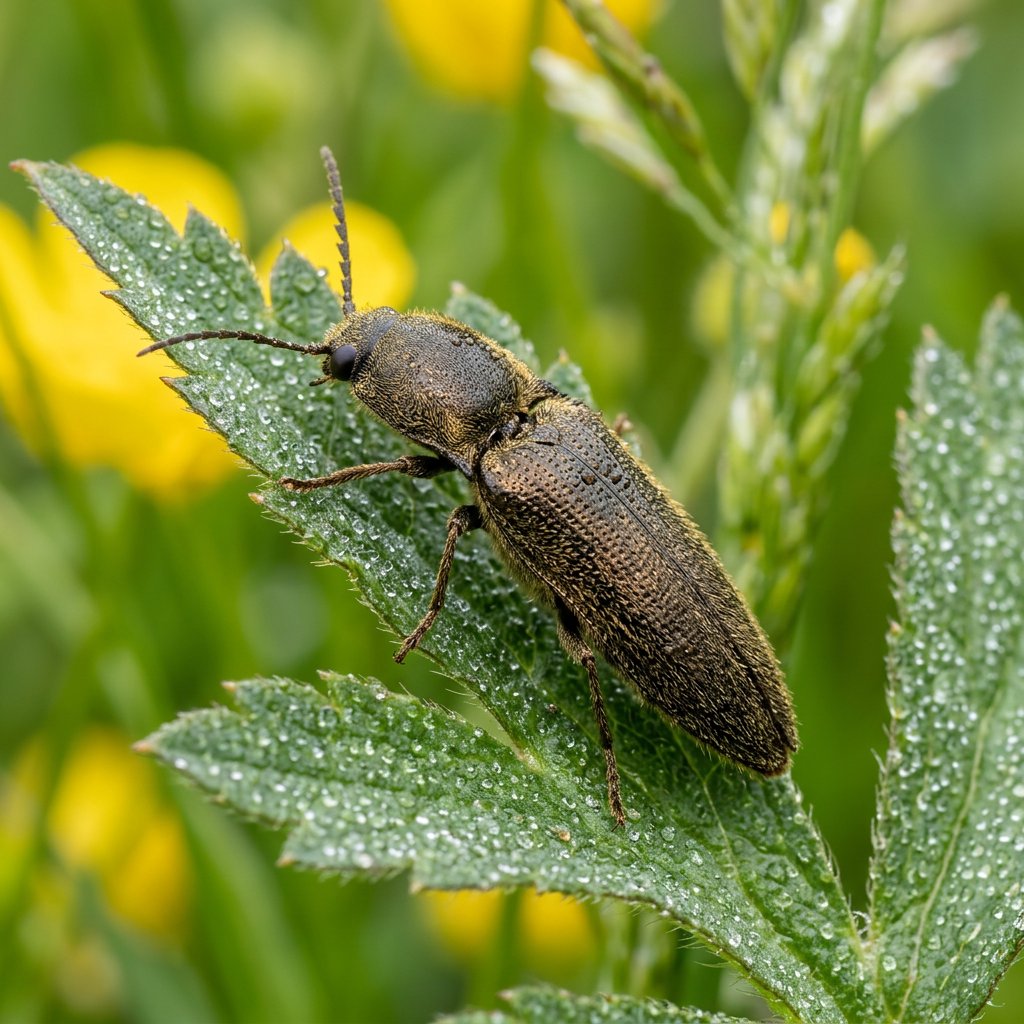
- 🪲 Body Shape: It has a distinctively long, narrow, and "bullet-shaped" body, typically measuring between 10mm and 15mm in length.
- 🎨 Coloration: Its wing cases (elytra) are a deep chocolate brown, often contrasting with a darker, almost black thorax. The very tip of the tail usually has a subtle orange-red tint.
- 🧥 Fine Texture: If you look closely, the entire body is covered in very fine, short greyish hairs, giving it a dull, matte finish rather than a metallic shine.
🌲 Habitat & Ecology
- 🥗 Adult Diet: Adults are most active from May to August. You will often find them resting on tall grasses, hawthorn hedges, or flowers, where they feed on nectar, pollen, and occasionally soft leaves.
- 🚜 The "Wireworm" Life: Before it takes flight, this beetle spends several years underground as a larva. Known as "wireworms," these larvae are tough-skinned and feed on the roots of grasses and tubers. They are well-known to potato farmers, as they can occasionally nibble on crops.
- 🌿 Movement: They are clumsy fliers but excellent climbers. They prefer sun-drenched woodland edges and "untidy" garden corners with plenty of leaf litter.
⚠️ Safety & Toxicity
- ✅ Status: Completely Harmless.
- 🤏 Gentle Touch: This beetle cannot sting and its mouthparts are far too weak to bite humans. If handled, it may feel like it is "pulsing" or "clicking" against your skin—this is just its unique defense mechanism trying to scare you away!
✨ Fun Fact
🚀 The Natural Catapult: The "Click Beetle" gets its name from a spectacular escape move. If it falls on its back, it snaps a peg-like structure on its thorax into a groove on its chest. This releases a sudden burst of energy that creates a loud "click" and launches the beetle several inches into the air, allowing it to flip upright and confuse any bird trying to eat it!
More Details








