Info
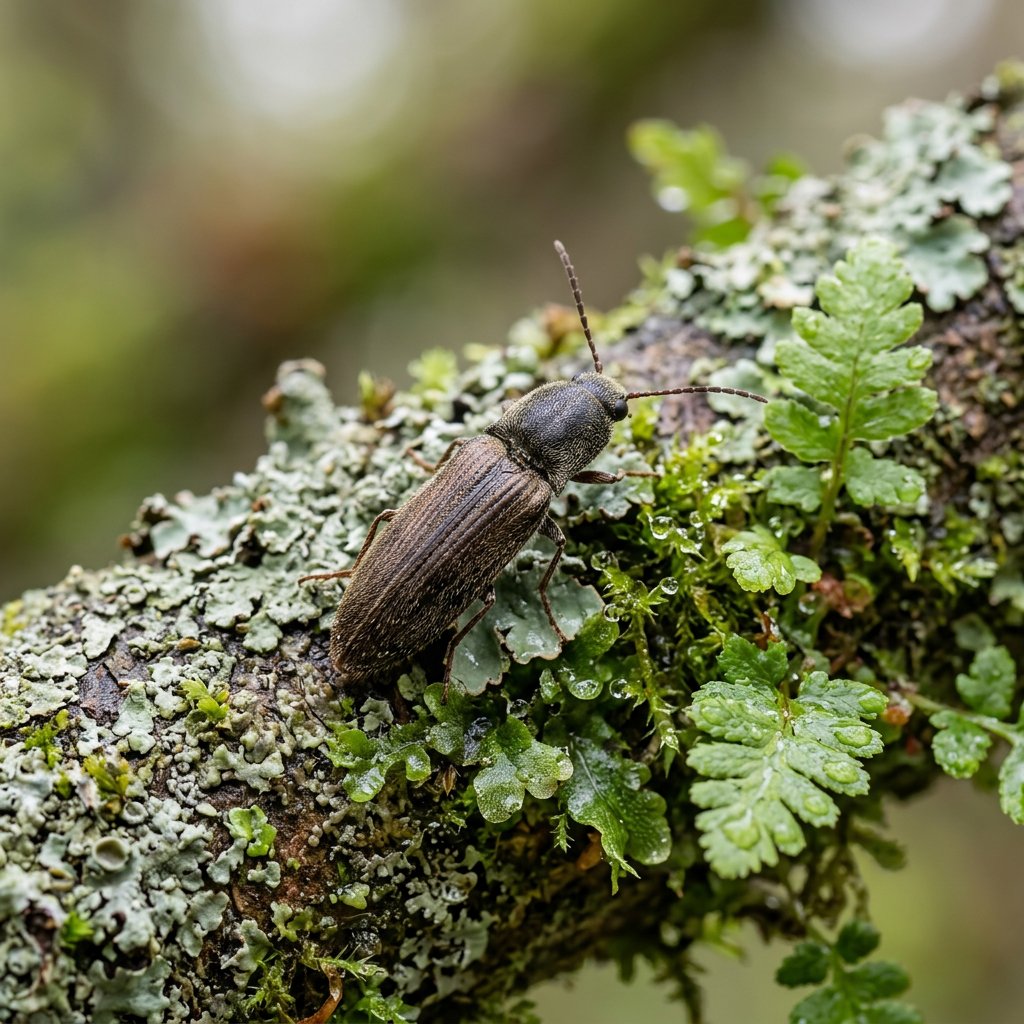
The Striped Click Beetle is a tiny, spring-loaded acrobat of the woodland undergrowth. Known for its distinct "racing stripes" and its ability to launch itself into the air with an audible click, this beetle is a common sight in European forests and hedgerows during the early summer. It belongs to a family of beetles that have perfected the art of the "snap-and-flip" to escape predators.
🔍 How to Identify
- 🪲 The "Bullet" Shape: It features a narrow, elongated body that is slightly flattened, resembling a tiny, rounded rectangle.
- 🎨 Racing Stripes: Its namesake feature is the pair of dark, longitudinal stripes running down its brownish or yellowish wing cases (elytra).
- 📐 Pointed Shoulders: The corners of its thorax (the middle section) end in sharp, backward-pointing spines that are characteristic of the click beetle family.
🌲 Habitat & Ecology
- 🌳 Forest Dweller: You are most likely to find them resting on the leaves of hazel, oak, or birch trees, or visiting flowers to snack on nectar and pollen.
- 🐛 The Wireworm Phase: Before becoming a flying beetle, it spends years underground as a "wireworm" larva, where it plays a role in the ecosystem by feeding on decaying wood and roots in the soil.
- 🍂 Active Season: They are most active from May to July, often seen sunning themselves on broad-leaved plants during warm afternoons.
⚠️ Safety & Toxicity
- ✅ Harmless Guest: The Striped Click Beetle is completely non-toxic and lacks any sting or painful bite. It is a "friend" to the gardener and nature walker.
- 🔊 The Jump Scare: If handled, the beetle will suddenly "click" its body to jump out of your hand. This is a startling mechanical snap, but it is entirely harmless to humans and pets.
✨ Fun Fact
The "click" mechanism is powered by a specialized spine on the beetle's chest that snaps into a matching groove. This movement is so powerful that it can launch the beetle several inches into the air—a feat of engineering that helps it flip over if it lands on its back!
More Details








