Info
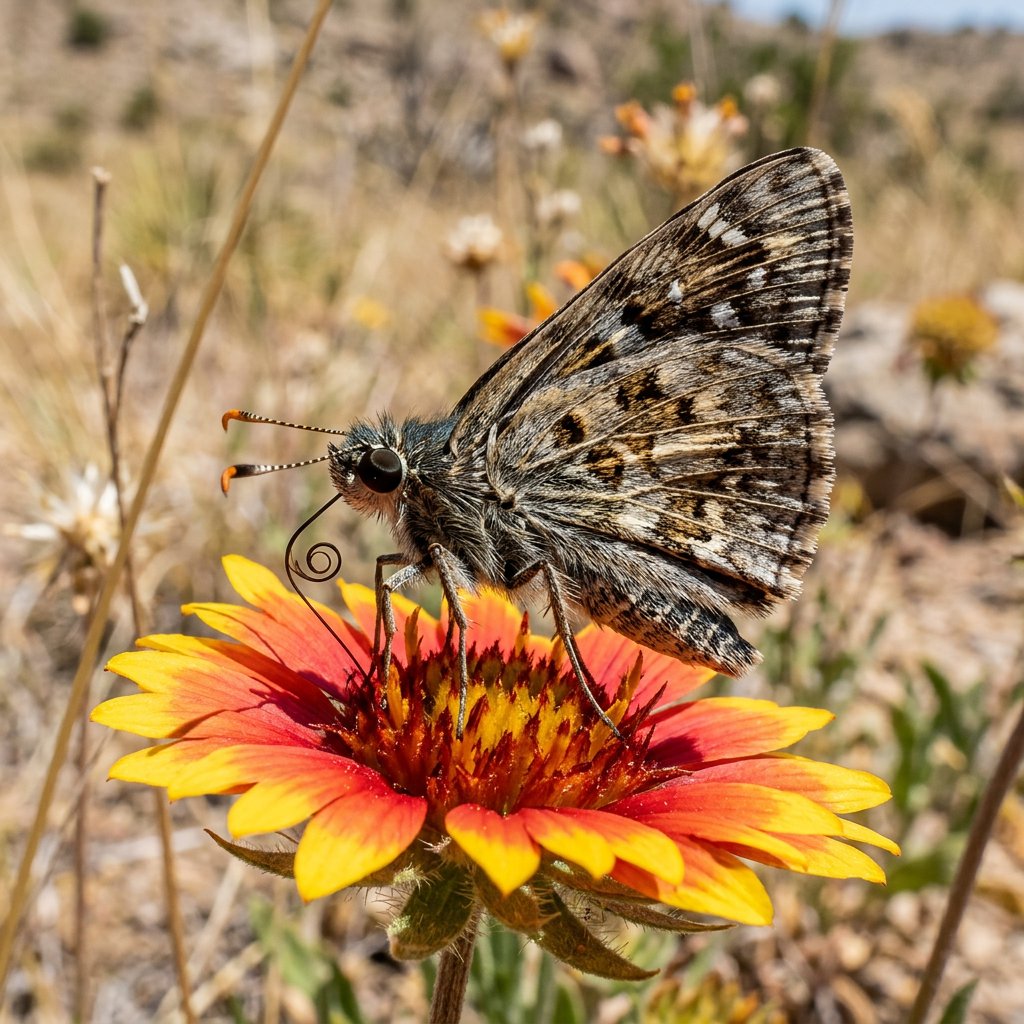
Known as the "Dusty Dancers" of the grass world, the Atrytonopsis skippers are the subtle gems of the butterfly family. Often mistaken for small moths due to their fuzzy, stout bodies and muted earth tones, these agile flyers are named for the "dusted" appearance of their wings. They are the understated acrobats of sunny clearings, darting so quickly between flowers that they seem to vanish into thin air.
🔍 How to Identify
- 🦋 Dusted Underwings: The most striking feature is the underside of the hindwing, which looks as though it has been lightly sprinkled with fine gray ash or flour.
- ⚪ Translucent Windows: Their deep chocolate or charcoal wings usually feature a few small, crisp, translucent white spots that catch the light during flight.
- 📡 Hooked Antennae: Look closely at their "feelers"—unlike the rounded clubs of most butterflies, these have a tiny, sharp hook at the very tip, resembling a crochet needle.
🌲 Habitat & Ecology
- 🌾 Grassland Specialists: These insects are deeply tied to native bunchgrasses. Their caterpillars are homebodies, building silk-lined "sleeping bags" at the base of grass clumps where they hide during the day and feed at night.
- ⚡ Erratic Flight: They are famous for their "skipping" movement. Instead of the graceful, slow flapping of a Monarch, Atrytonopsis moves in high-speed, zig-zag bursts, making them a fun challenge for amateur photographers.
⚠️ Safety & Toxicity
- ✅ Perfectly Safe: These skippers are entirely harmless to humans and pets. They do not sting, do not bite, and possess no chemical defenses or toxins.
- 🌸 Gentle Pollinators: They are beneficial visitors to any garden, spending their short adult lives sipping nectar from wildflowers like clover, vetch, and wild strawberry, helping your garden thrive.
✨ Fun Fact
Skippers are often called the "Evolutionary Bridge" because they share traits with both butterflies and moths. While they are active during the day like butterflies, they have the thick, muscular bodies and rapid wing-beats typically associated with moths!
More Details








