Info
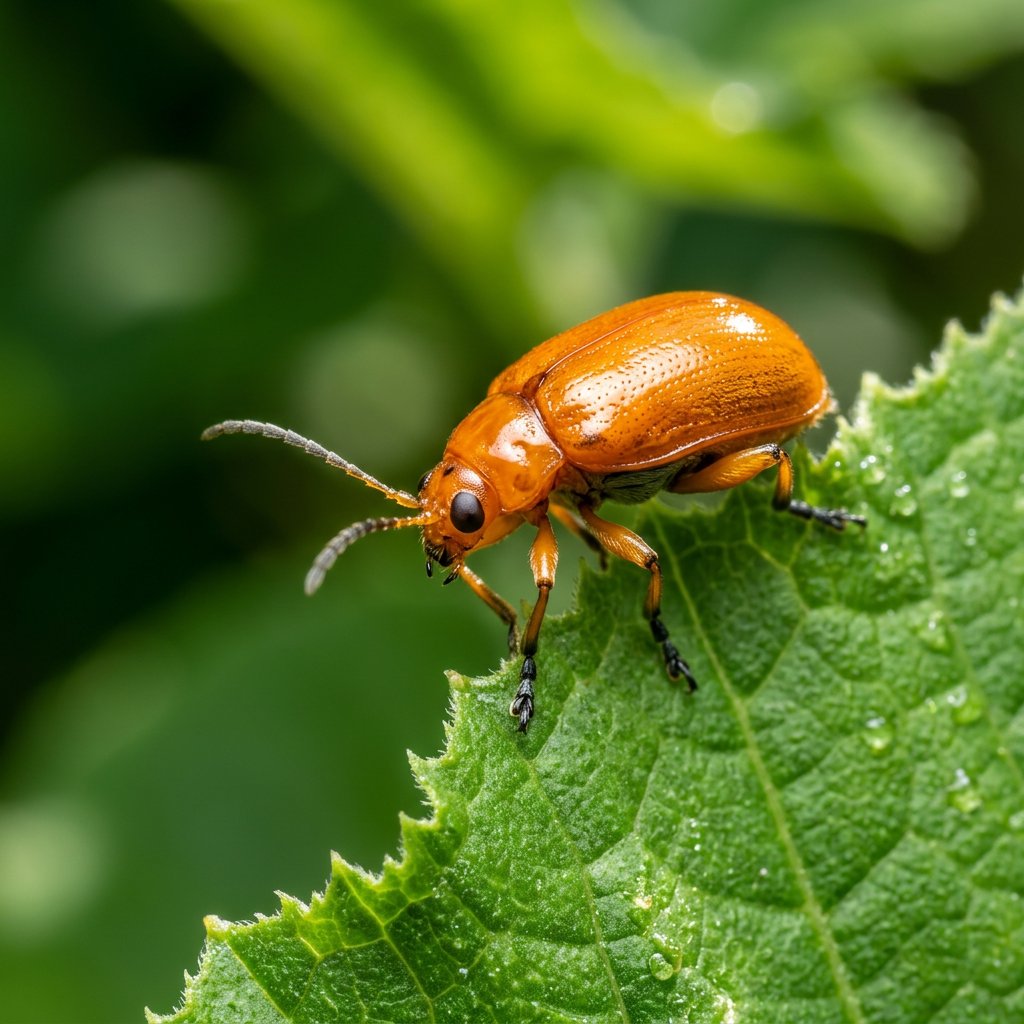
Often called the Pumpkin Beetle or Melon Beetle, Aulacophora is a vibrant, sun-colored insect that is a frequent visitor to vegetable patches. While their bright orange shells make them easy to spot, they are the arch-nemesis of gardeners growing cucumbers, squash, and melons. In many cultures, they are seen as a sign that the harvest is in danger, as they are as hungry as they are colorful.
🔍 How to Identify
- 🎨 Vibrant Coloring: Most species are a striking, uniform glossy orange or reddish-yellow, though some variations feature black spots or bands.
- 🪲 Elongated Shape: Unlike the round, dome-like shape of a ladybug, these beetles have a more rectangular, elongated-oval body.
- 📡 Thread-like Antennae: They possess long, slender antennae that are constantly twitching as they navigate through large, hairy garden leaves.
🌿 Habitat & Ecology
- 🥒 The Cucurbit Connoisseur: This insect is a specialist that thrives almost exclusively on plants in the Cucurbitaceae family. If you have pumpkins, watermelons, or cucumbers, you are likely to find them nearby.
- 🕳️ Dual-Stage Damage: They are a "double threat" to the garden. While the adults devour the leaves and flowers from above, their larvae (grubs) live in the soil, quietly nibbling on the plant's root system.
- ☀️ Sun Seekers: They are most active during the heat of the day, often seen basking on the top of wide leaves before taking flight if disturbed.
⚠️ Safety & Toxicity
- ✅ Harmless to Humans: Aulacophora beetles do not bite, sting, or carry venom. They are completely safe to pick up or move by hand.
- 🐾 Pet Safety: They are not known to be toxic to cats or dogs if accidentally ingested, though their hard shells might cause minor stomach upset.
- 🚫 Garden Threat: Their primary "danger" is to your food supply. An uncontrolled population can quickly skeletonize a young plant, leading to wilt and crop failure.
✨ Fun Fact
These beetles are masters of "trenching." To avoid the bitter, sticky chemical defenses that pumpkin plants pump into their leaves, the beetle will bite a neat circle into the leaf first. This "trenches" the area, cutting off the flow of sap so the beetle can eat the middle of the circle without getting a mouthful of bitter toxins!
More Details








