Info
The Common Looper (Autographa precationis) is nature’s little calligrapher, often found fluttering around garden lights or resting quietly on leafy greens. It gets its name from the distinct silver "scribble" on its wings that looks like a tiny, shimmering cursive signature. While it might look like a plain brown leaf at rest, this moth is a master of disguise and a frequent visitor to backyard gardens across North America.
🔍 How to Identify
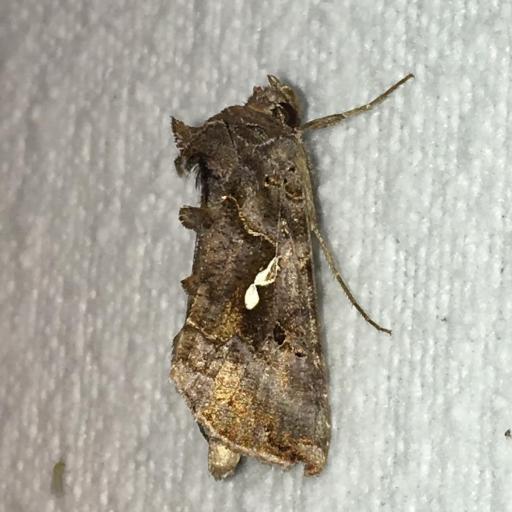
- 🦋 The "Signature": Look for a bright, silvery-white mark on each forewing that resembles a lowercase Greek letter "gamma" or a "y" paired with a small dot.
- 🍂 Camouflage Pattern: Its wings are a complex mosaic of mottled grayish-brown, bronze, and gold, designed to mimic dried leaves or tree bark perfectly.
- 🧸 Thoracic Tuft: It features a distinctive "mohawk" of fuzzy scales on its back (thorax), giving the moth a hunched, furry appearance when viewed from the side.
🌲 Habitat & Ecology
- 🥗 A Wide Menu: Unlike many insects that are picky eaters, the Common Looper larvae are generalists. They enjoy a huge variety of plants, including clover, sunflowers, dandelions, and even garden vegetables like beans and cabbage.
- 🌙 Nocturnal Navigator: The adults are most active at night. If you leave a porch light on, you are likely to find them resting nearby, though they also enjoy sipping nectar from flowers like phlox and milkweed during the twilight hours.
- 🤸 The Looper Shuffle: The caterpillars move in a very specific way. Because they lack middle legs, they must arch their bodies into a high "loop" to bring their back legs forward, making them look like they are measuring the leaf as they walk.
⚠️ Safety & Toxicity
- ✅ Harmless to Humans: This moth is a "friend" to humans. It does not bite, sting, or possess any irritating hairs. It is completely safe to handle or observe closely.
- 🌱 Garden Nuisance: While they aren't dangerous to people or pets, a large family of their "looping" caterpillars can leave small, ragged holes in your favorite ornamental plants or leafy greens.
- 🐾 Pet Safety: They are non-toxic. If a curious cat or dog happens to catch one, there is no need for concern.
✨ Fun Fact
- ✍️ The genus name Autographa translates from Greek to mean "self-writing." Early naturalists were so impressed by the silver markings that they believed the moth carried its own handwritten signature!
More Details








