Info
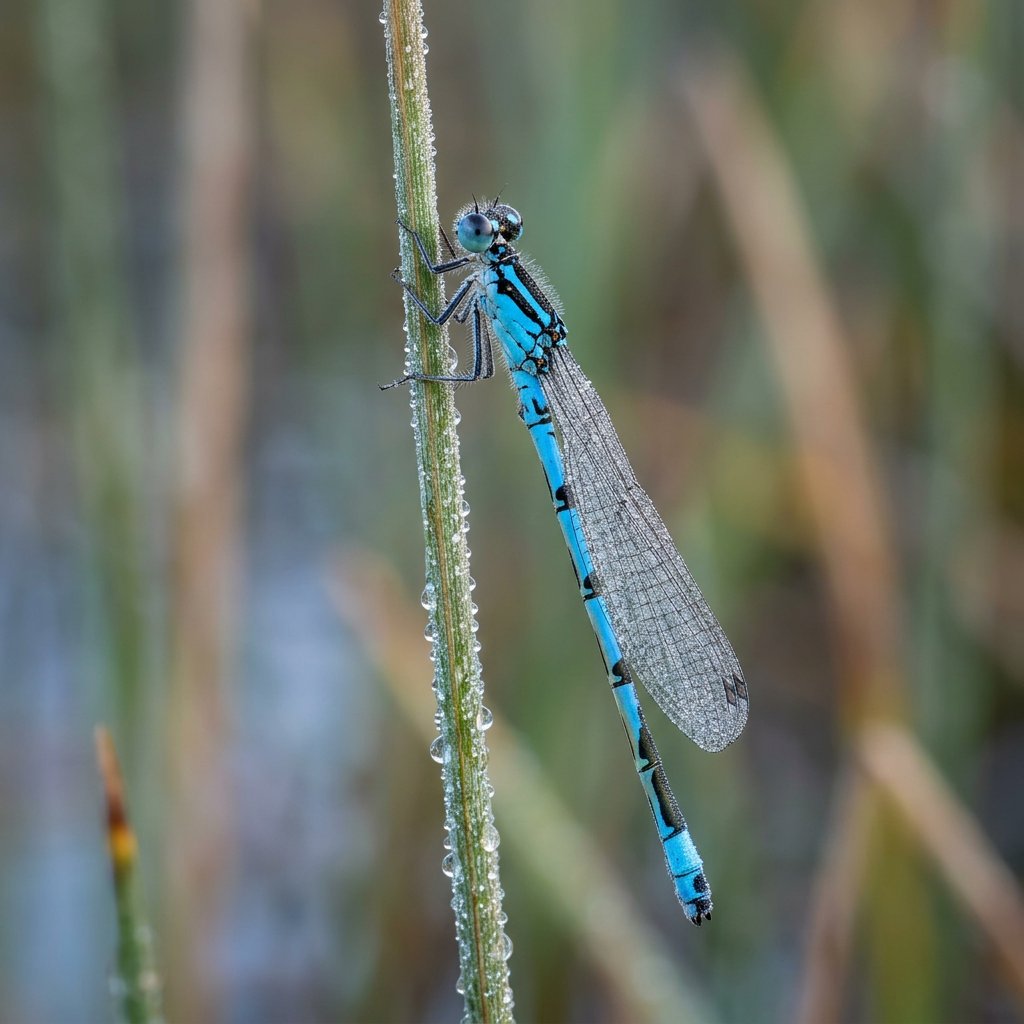
Often called the Black-backed Bluet, this tiny damselfly looks like a sliver of the summer sky patrolling the water's edge. Found primarily across tropical Africa and the Arabian Peninsula, it is a master of the wetlands, darting with needle-like precision to catch its prey. For nature lovers, seeing one is a sign of a healthy, vibrant aquatic ecosystem.
🔍 How to Identify
- 🎨 Electric Blue Body: The males boast a brilliant, neon-blue coloration that creates a striking contrast against green reeds and dark mud.
- 🖋️ The "Black Back": True to its Latin name (nigridorsum), a thick, continuous dark stripe runs down the top of its thorax and along the segments of its slender abdomen.
- 📏 Delicate Wings: Unlike their bulkier dragonfly cousins, these damselflies are thin as a needle and almost always rest with their wings folded neatly together along their back.
🌲 Habitat & Ecology
- 💧 Marshland Resident: You will most likely spot them near slow-moving water, stagnant ponds, or marshy areas where there is plenty of tall grass and reeds to perch on.
- 🦟 Tiny Guardian: They are voracious aerial predators. They spend their days hunting mosquitoes, midges, and other small flying insects, making them excellent natural pest controllers.
⚠️ Safety & Toxicity
- 🛡️ Completely Harmless: The Black-backed Bluet is a "gentle" predator. It possesses no stinger and does not seek out humans or animals to bite.
- 🐾 Safe for Pets: They are non-toxic and pose no threat to curious dogs or cats that might try to chase them through the garden.
✨ Fun Fact
Damselflies like the Black-backed Bluet belong to an ancient order called Odonata. Their ancestors were darting through the air over 250 million years ago—meaning they were hunting near swamps long before the first dinosaurs ever walked the Earth!
More Details








