Info
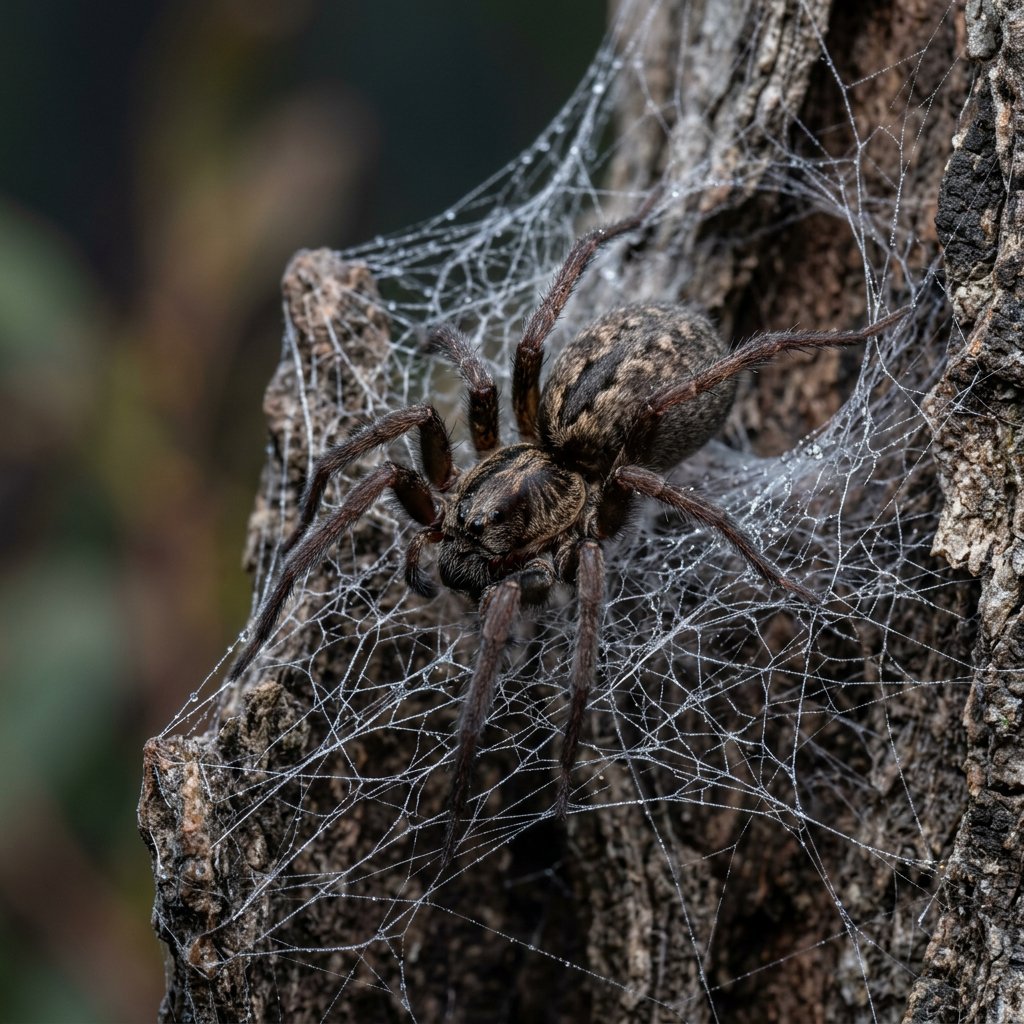
The Grey House Spider (Badumna longinqua) is a quiet, fuzzy-legged tenant that has traveled from its native Australia to urban windowsills around the globe. Often mistaken for more "scary" species due to its dark, robust build, it is actually a shy weaver that prefers the dark corners of your porch or garden shed. Known for building messy, zig-zagging "lace webs," it acts as a natural pest controller for your home.
🔍 How to Identify
- 🕷️ The Abdomen: Look for a stout, oval-shaped body covered in fine grey or brownish hairs, often featuring a subtle mottled pattern of paler spots.
- 🕸️ The "Lace" Web: Unlike the perfect circles of orb-weavers, this spider creates a chaotic, woolly-looking web with a distinct funnel-like retreat where it hides during the day.
- 🦵 Legs: Their legs are thick and hairy, typically darker than the body, and held in a compact stance rather than sprawling out wide.
🌲 Habitat & Ecology
- 🏠 Urban Dwellers: These spiders are "synanthropic," meaning they love living near humans. You’ll find them in window frames, door hinges, and under eaves where porch lights attract their dinner.
- 🦟 The Velcro Trap: Their silk is "cribellate," meaning it isn't sticky with glue. Instead, it’s made of thousands of tiny, dry loops that snag the legs of flies and moths like a Velcro strip.
- 🌙 Night Watch: They are primarily nocturnal, sitting at the entrance of their silk tunnel at night, waiting for the vibration of a trapped insect to signal mealtime.
⚠️ Safety & Toxicity
- ✅ Low Risk: The Grey House Spider is generally timid and would much rather retreat into its funnel than bite a human.
- 🩹 The Bite: While they are venomous (to kill insects), their bite is not medically significant for humans. It may cause localized pain, redness, or mild swelling similar to a bee sting.
- 🐾 Pets: They are not considered a danger to cats or dogs, though any spider bite can cause minor irritation to a curious pet's nose.
✨ Fun Fact
The silk of Badumna longinqua is so effective at catching prey that other "thief spiders" (Argyrodes) often sneak into their webs to steal the trapped insects, like a tiny porch pirate!
More Details








