Info
The Eurasian White-banded Black (Baptria tibiale) is a tiny, monochrome masterpiece of the deep woods. Often mistaken for a butterfly because it flits through the sunlight, this moth is a specialist of damp, shady forests. Its stark black-and-white patterns serve as a bold, elegant signature against the green shadows of the forest floor.
🔍 How to Identify
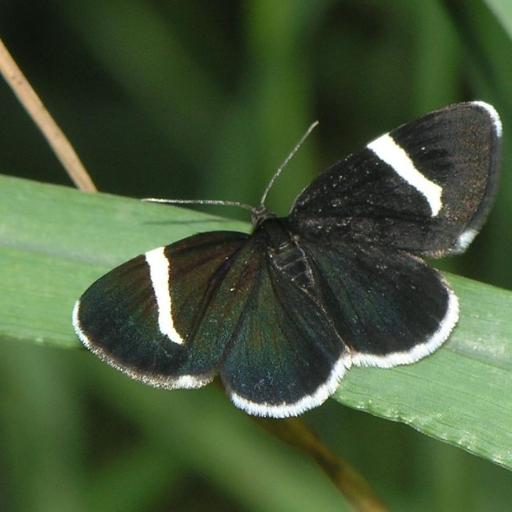
- 🦋 The Wings: Features a velvety, deep black base color with one or two prominent, clean white bands crossing both the forewings and hindwings.
- 📐 Resting Posture: Unlike many moths that fold their wings like a tent, this species usually rests with its wings spread perfectly flat, showcasing its geometric patterns.
- 📏 Size & Shape: A delicate flyer with a wingspan of about 22–27 mm; it has a slender body and relatively rounded wing edges compared to other geometrid moths.
🌲 Habitat & Ecology
- 🌿 The Baneberry Bond: This moth is a "specialist." Its caterpillars are picky eaters, feeding almost exclusively on the leaves of the Baneberry plant (Actaea spicata). Consequently, you will only find this moth in ancient, moist woodlands where its host plant thrives.
- ☀️ Sun-Seeker: While most moths are creatures of the night, Baptria tibiale is strictly diurnal (day-flying). It is most active in the late morning, dancing through "sun flecks"—those small patches of light that pierce through the thick forest canopy.
⚠️ Safety & Toxicity
- ✅ Harmless: This moth is a gentle "friend." It does not bite, sting, or possess any defensive chemical sprays.
- 🛡️ Non-Toxic: Unlike some brightly colored insects that signal they are poisonous to eat, this moth relies on its flight and forest camouflage for protection. It is safe for humans and curious pets.
✨ Fun Fact
- 🎭 Butterfly Mimic: Because of its day-flying habits and striking patterns, many beginner naturalists mistake it for a small butterfly. It wasn't until scientists looked closely at its feathered antennae and wing-coupling mechanism that it was firmly classified as a Geometrid moth!
More Details








