Info
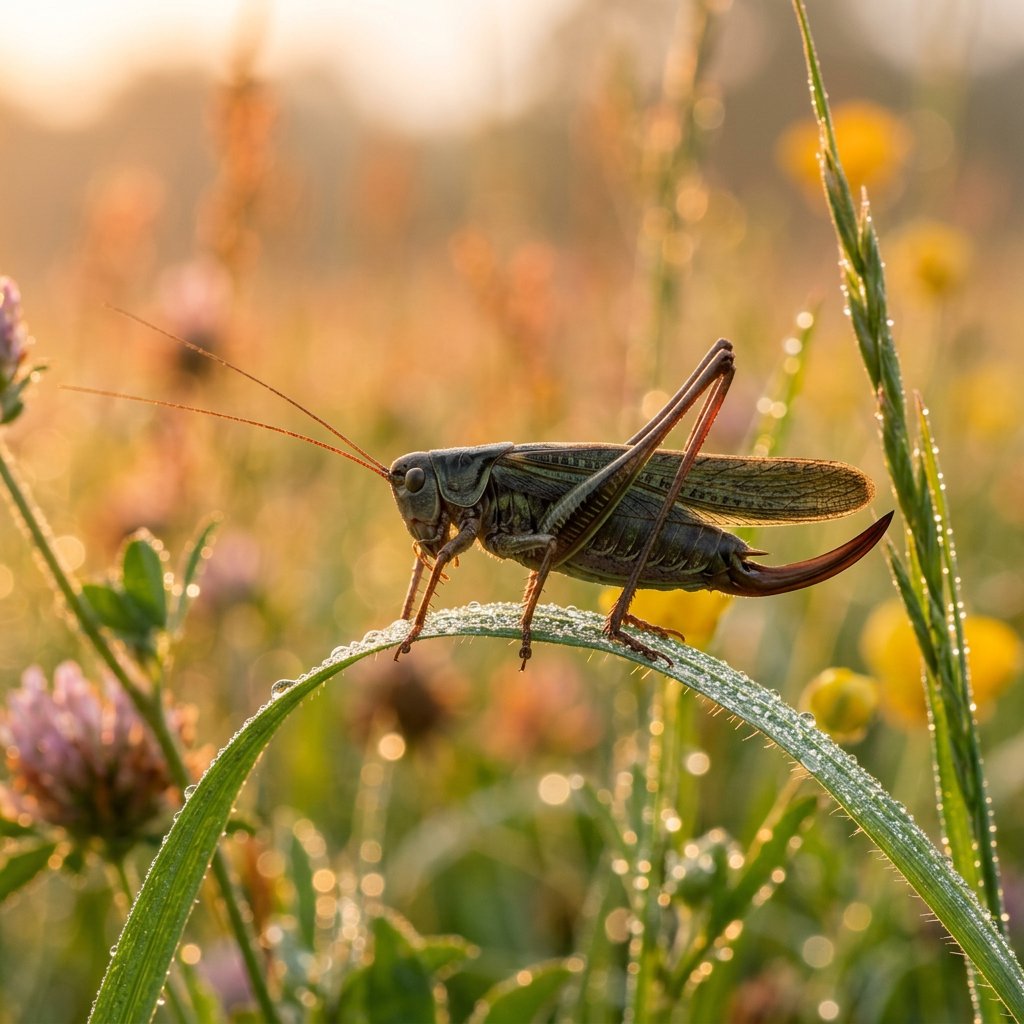
Often called the Saw-tailed Bush-cricket, this elegant insect is a master of camouflage, blending perfectly into the dappled sunlight of European deciduous forests. While its name might sound intimidating, the "saw" is actually a specialized tool used by females for laying eggs rather than a weapon for defense. You’re most likely to spot them (if you’re lucky!) perched on the leaves of oak or hornbeam trees, living a quiet, arboreal life.
🔍 How to Identify
- 🎨 Color Palette: A vibrant lime-green body, often decorated with a fine "dusting" of tiny dark red or black spots across its back.
- 🪽 Vestigial Wings: They possess very small, scale-like wings that are tucked behind the head; because of this, they are flightless and rely on crawling or jumping.
- 🪚 The "Saw": Females have a distinctive, upward-curved ovipositor with a serrated (saw-like) edge at the tip, while males have reddish, S-shaped appendages at their tail.
🌲 Habitat & Ecology
- 🌳 Canopy Dwellers: Unlike many crickets that stay in the grass, this species prefers the "high life," living in the leaves of deciduous trees and tall shrubs.
- 🍃 Gentle Herbivore: They are strictly vegetarians, nibbling on the leaves of various broad-leaved trees. They are rarely numerous enough to be considered a garden pest.
- 🌙 Night Owls: They are most active during the twilight hours and at night. During the day, they remain perfectly still to avoid being spotted by hungry birds.
⚠️ Safety & Toxicity
- ✅ Harmless: The Saw-tailed Bush-cricket is completely non-toxic and poses no threat to humans, cats, or dogs.
- 🛡️ Defensive Behavior: It does not have a stinger. If handled roughly, it might try to give a tiny, harmless pinch with its mandibles, but it generally prefers to simply jump away.
✨ Fun Fact
Their "song" is so high-pitched that it sits at the very edge of human hearing! As people age and lose the ability to hear high frequencies, this cricket’s song is often one of the first sounds of nature that disappears from their world.
More Details








