Info
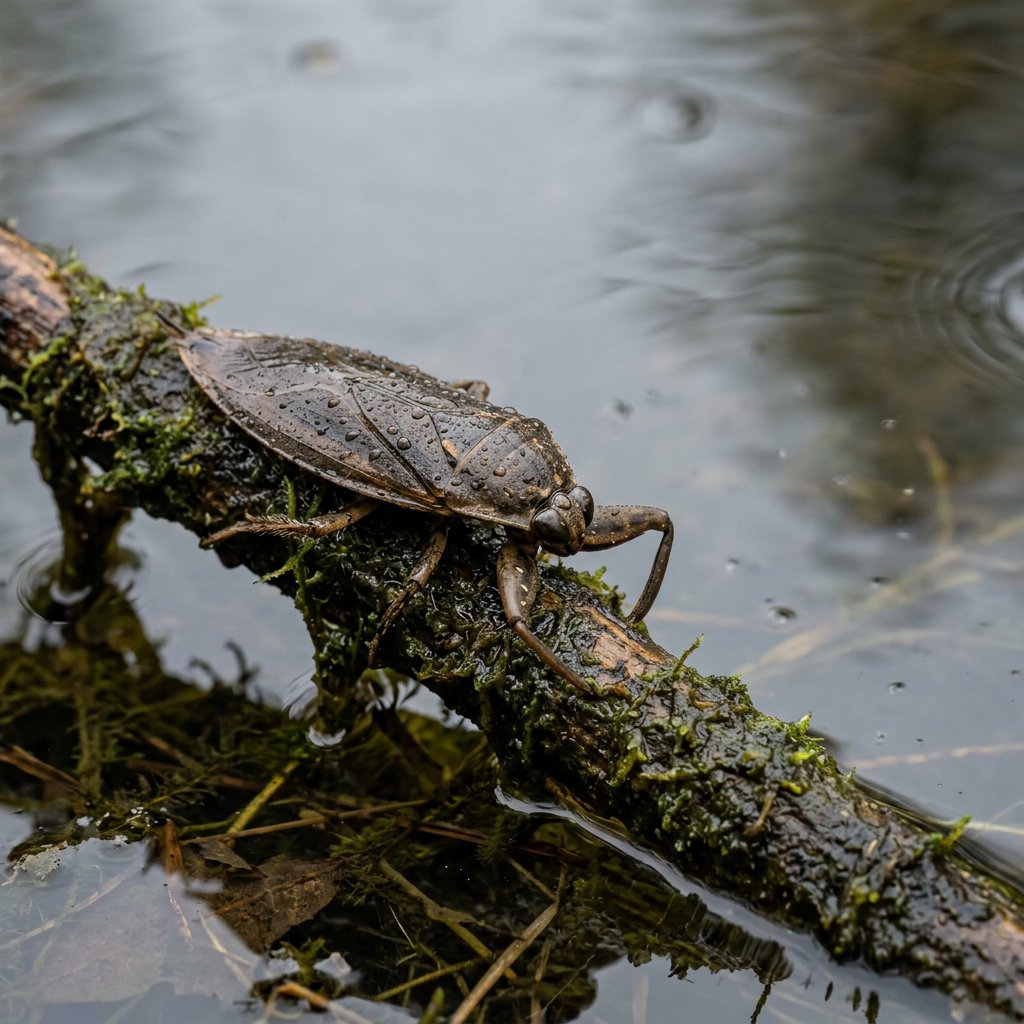
Often called the "Giant Water Bug" or more ominously, the "Toe-Biter," Benacus griseus is a true titan of the freshwater world. While they might look like prehistoric monsters, they are fascinating aquatic hunters that play a crucial role in keeping pond ecosystems balanced. If you see one under a streetlamp far from water, don't be surprised—these "electric light bugs" are surprisingly strong fliers that travel between ponds at night.
🔍 How to Identify
- 🛶 Body Shape: A large, flattened, oval body (up to 2.5 inches long) that resembles a dried leaf, providing perfect camouflage against muddy pond bottoms.
- 🦾 Raptorial Forelegs: Thick, muscular front legs curved like pincers, designed specifically for snatching and pinning down slippery prey.
- 🤿 Abdominal Snorkel: They breathe through two short, retractable tubes at the tip of their abdomen, which they poke above the water's surface like a snorkel while the rest of the body remains hidden.
🌊 Habitat & Ecology
- 🎣 The Ambush Hunter: These are top-tier predators in still waters. They lurk motionless among aquatic weeds to strike at prey much larger than themselves, including tadpoles, small fish, and even young frogs.
- 💡 Nighttime Aviators: Despite living in water, they are powerful fliers. They are frequently found in parking lots or near porch lights, as they use the moon to navigate and often get confused by bright artificial "electric" lights.
⚠️ Safety & Toxicity
- 💥 The Bite: Their nickname "Toe-Biter" is well-earned. While they do not seek out humans, they will bite if stepped on or handled. They inject a powerful digestive enzyme that causes an immediate, intense, and lasting burning sensation.
- 🧤 Safe Observation: They are safe to watch from a distance, but never pick one up with bare hands. If you find one stranded on land, use a shovel or a container to move it back to a nearby water source. Keep curious pets away, as a bite to the nose is very painful.
✨ Fun Fact
Benacus griseus fathers are surprisingly dedicated parents! After the female lays a cluster of eggs on vegetation just above the waterline, the male stays nearby to guard them from predators and will repeatedly climb out of the water to "wet" the eggs with his body to keep them from drying out.
More Details








