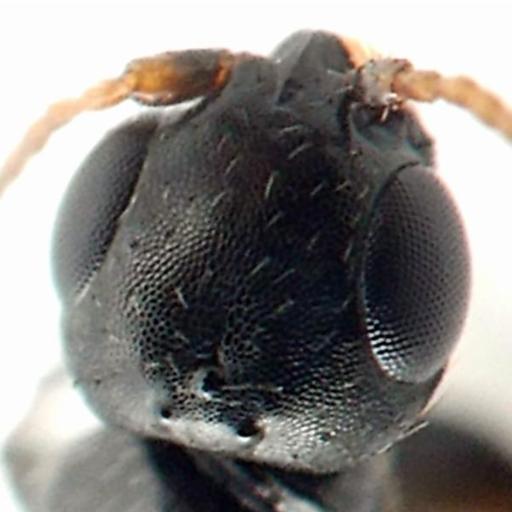
Info
Often called "Flat Wasps," members of the Bethylidae family are the unsung ninjas of the insect world. Though they look remarkably like ants, these tiny wasps are actually highly specialized hunters that protect our homes and gardens from hidden pests. They are famous for their remarkable ability to squeeze into the narrowest cracks to track down their prey.
🔍 How to Identify
- 📏 Flattened Profile: Their name "Flat Wasp" comes from their horizontally compressed bodies, perfectly evolved for crawling under tree bark or into tight beetle tunnels.
- 🐜 Ant-Like Appearance: They are frequently mistaken for ants because of their elongated bodies and fast, scurrying movement, but they lack the distinct "nodes" (humps) on their waist that ants possess.
- 🖤 Sleek Coloration: Most species are a polished, glossy black or deep brown, occasionally featuring a subtle metallic sheen under bright light.
🌲 Habitat & Ecology
- 🪲 Larval Hunters: These wasps are parasitoids that specifically target the larvae of beetles and moths. They are the primary predators of "hidden" pests like wood-boring beetles and grain moths.
- 🏠 Household Helpers: If you spot one indoors, don't reach for the spray! They are likely on a mission to find and eliminate common household nuisances like carpet beetles or pantry pests.
- 🍂 Micro-Habitats: In nature, they are found in leaf litter, bird nests, and under the bark of decaying logs, wherever their prey might be hiding.
⚠️ Safety & Toxicity
- 🐝 The Sting: Female Bethylidae possess a functional stinger (which is actually a modified egg-laying organ). They are not aggressive towards humans, but they can deliver a sharp, pinprick-like sting if they are trapped in clothing or handled roughly.
- 🛡️ Low Risk: They are generally considered beneficial. They do not carry diseases and do not cause structural damage; their presence is usually a sign that they are cleaning up other insect infestations for you.
✨ Fun Fact
Bethylid wasps are incredibly strong for their size! After paralyzing a beetle larva that may be several times their own weight, the female wasp will often drag it to a "safe house" or deeper into a crevice to ensure her offspring have a private meal.
More Details








