Info
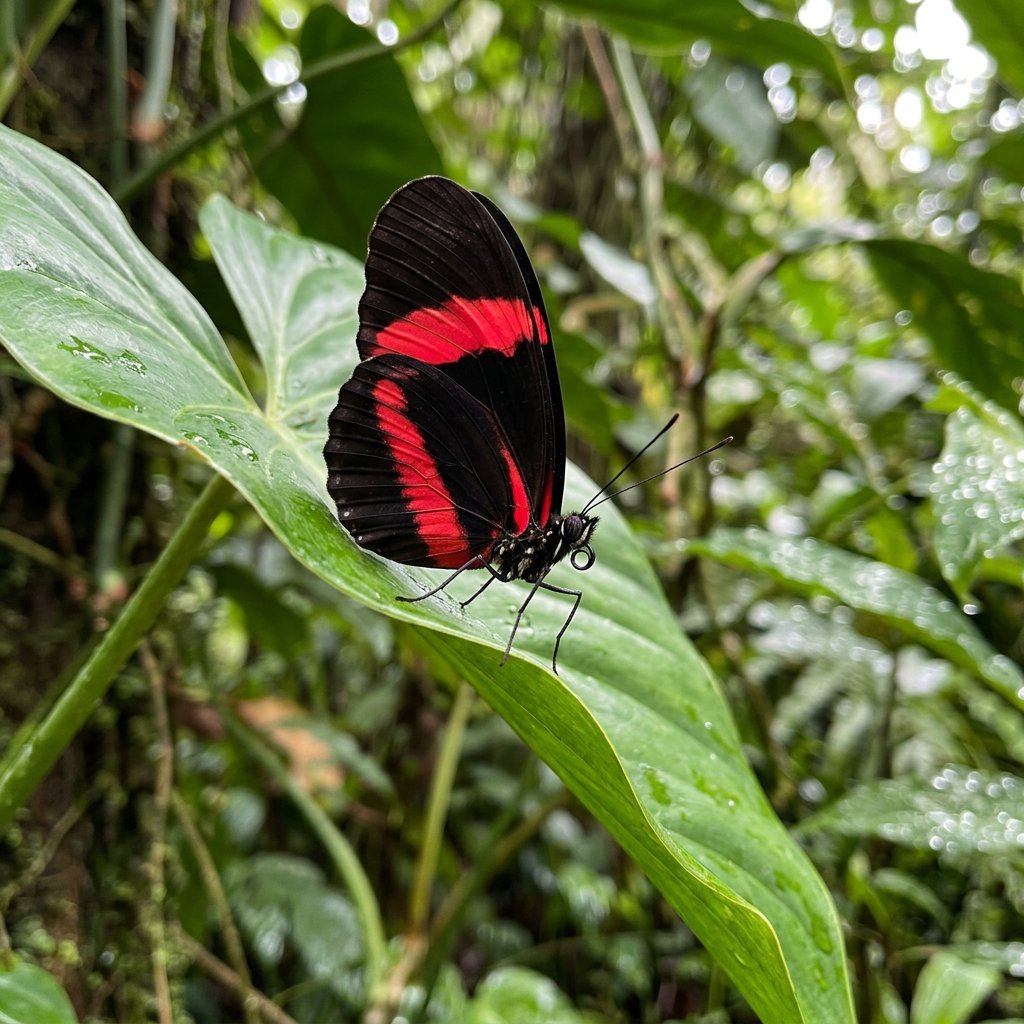
Often called the Red-rimmed Pickerwing, the Biblis butterfly looks like a piece of dark lace that has been carefully dipped in crimson ink. This elegant flyer is a common sight in the tropical forests of the Americas, known for its slow, rhythmic flight pattern that makes it easy to spot and appreciate. It is a "friendly" insect that adds a splash of gothic beauty to any woodland path.
🔍 How to Identify
- 🦋 The "Pickerwing" Edge: Its most iconic feature is the scalloped or "jagged" edge of the wings, which gives it a uniquely textured, lace-like silhouette.
- 🔴 Crimson Borders: The upper side of the hindwings features a striking row of bright pinkish-red or orange spots that form a continuous, glowing band against the dark background.
- 🌑 Velvet Contrast: The base color of the wings is a deep, velvety black or charcoal brown, which helps the butterfly blend into the shadows of the forest undergrowth when its wings are closed.
🌲 Habitat & Ecology
- 🍎 A Different Diet: Unlike many butterflies that strictly chase nectar, the Biblis is frequently seen "puddling" on damp ground or sipping juices from rotting fruit and fermenting tree sap.
- 🍃 Forest Edge Dwellers: They prefer the dappled light of woodland edges and shaded thickets rather than wide-open, sunny fields. They usually stay low to the ground, fluttering among the shrubs.
- 🌿 Noseburn Host: Their caterpillars are specialists, feeding almost exclusively on Tragia plants (noseburn). These plants have stinging hairs, which the caterpillars navigate with ease.
⚠️ Safety & Toxicity
- ✅ Harmless Adult: The adult Biblis butterfly is completely safe for humans and pets. It does not bite or sting and is a peaceful visitor to gardens.
- 🐛 Caterpillar Caution: While the butterfly is safe, the caterpillars are covered in branched, prickly spines. If you encounter one, avoid touching it with bare hands, as the spines can cause mild skin irritation or an itchy rash.
- 🐾 Pet Safety: They are not known to be toxic to cats or dogs if accidentally ingested, though their host plants (Tragia) can be irritating to a pet's paws or mouth.
✨ Fun Fact
- 🎭 Confident Flier: Because the Biblis tastes bitter to birds (due to chemicals they eat as caterpillars), they don’t feel the need to fly fast. They have a "lazy" flight style because they know most predators have learned that a red-rimmed wing means a bad-tasting meal!
More Details








