Info
Meet the Peppered Moth, perhaps the most famous insect in the history of science. Often called the "Darwin Moth," this humble creature became the ultimate poster child for evolution during the Industrial Revolution. It is a harmless, nocturnal resident of gardens and woodlands that carries a fascinating story of survival written right on its wings.
🔍 How to Identify
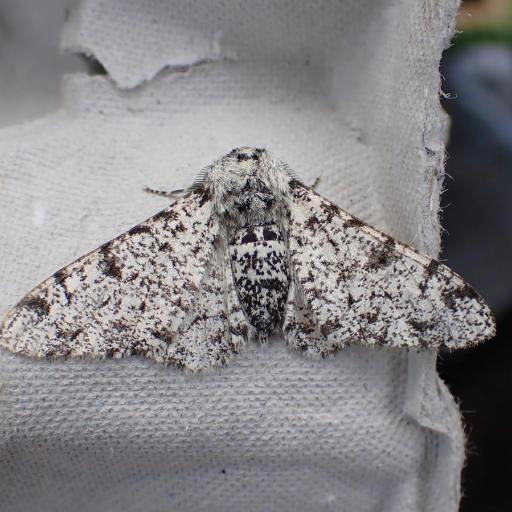
- 🎨 Wing Pattern: Most commonly seen with "salt-and-pepper" wings—white with fine black speckling. However, a dark "melanic" version exists that is almost entirely charcoal black.
- 📐 Resting Profile: When it lands, it spreads its wings flat against the surface to minimize its shadow, making it nearly invisible against lichen-covered bark.
- 🐛 Twig Mimicry: In their larval (caterpillar) stage, they are incredible mimics. They hold their bodies stiffly at an angle from a branch, perfectly resembling a small, woody twig.
- 🧶 Fuzzy Thorax: Like many moths, they have a thick, "furry" upper body that helps them retain heat during chilly nights.
🌲 Habitat & Ecology
- 🏡 Garden Guest: You will likely find them in suburban gardens, parks, and deciduous forests. They are attracted to light, so look for them resting near your porch lamp in the early morning.
- 🌳 Lichen Lovers: Their primary survival strategy is resting on trees covered in light-colored lichens. They are highly sensitive to air quality; a high population of "salt-and-pepper" moths usually indicates healthy, unpolluted air in your neighborhood.
- 🦉 The Food Web: They serve as a vital food source for songbirds and bats. While the adults don't eat much, the caterpillars munch on the leaves of birch, willow, and oak trees.
⚠️ Safety & Toxicity
- ✅ Gentle Neighbor: The Peppered Moth is 100% harmless to humans. They do not bite, they have no stinger, and they do not carry any known diseases.
- 🐾 Pet Safety: They are non-toxic to curious cats and dogs. The "dust" on their wings is actually tiny scales, which might cause a minor sneeze if inhaled, but is otherwise safe.
- 🌿 Plant Health: While the caterpillars eat leaves, they rarely appear in high enough numbers to cause significant damage to your garden trees.
✨ Fun Fact
The Peppered Moth provided the first-ever visual proof of natural selection in action. As coal soot turned English trees black in the 1800s, the white moths were eaten by birds while the rare black moths survived and multiplied. Once air quality improved decades later, the "salt-and-pepper" moths made a triumphant comeback!
More Details








