Info
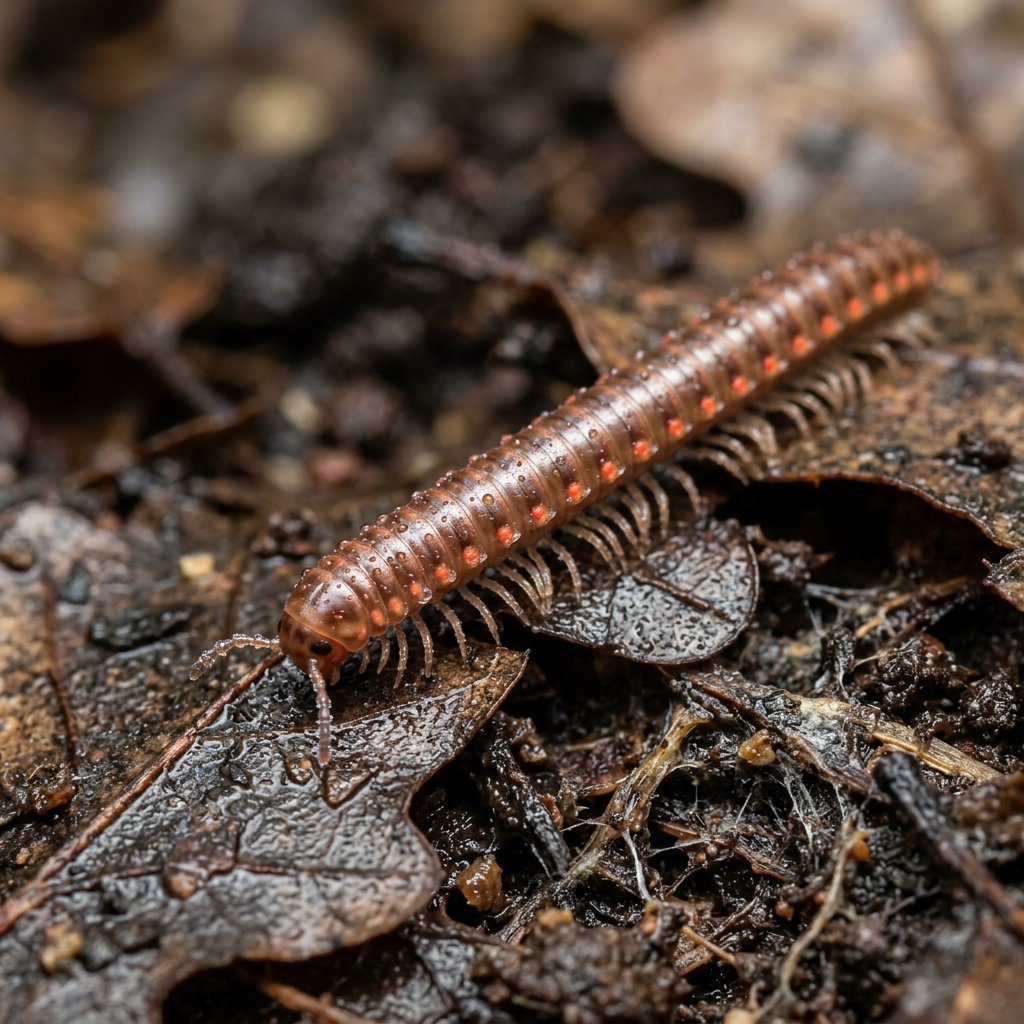
Often called the Spotted Snake Millipede, this slender traveler looks like a tiny, animated string of pearls. While it’s technically a myriapod rather than a true insect, it is a common sight for gardeners across Europe and North America. Though they are vital recyclers of the earth, they occasionally get a bad reputation for nibbling on young seedlings when they get thirsty.
🔍 How to Identify
- 🐍 Body Shape: Extremely thin, cylindrical, and worm-like, often reaching about 10–15mm in length.
- ⚪ Coloration: A pale, creamy-white or yellowish body that almost looks translucent.
- 🔴 The "Blood" Spots: A row of bright orange or crimson-red spots running down each side of the body; these are actually its defensive scent glands (ozopores).
- 👣 Legs: Dozens of tiny, translucent legs that move in a rhythmic, wave-like motion.
🌲 Habitat & Ecology
- 🍂 The Decomposer Role: These millipedes are nature’s clean-up crew. They primarily live in the soil and leaf litter, breaking down dead leaves and organic debris into nutrient-rich compost.
- 💧 Moisture Seekers: Because they lack a waxy coating on their shells, they dry out easily. You will find them huddled in the coolest, dampest parts of the garden, such as under logs, stones, or deep within mulch.
- 🌱 Occasional Pest: While usually "friends," in very dry weather or high populations, they may seek moisture by feeding on soft plant tissues like strawberry fruits, potato tubers, or sugar beet seedlings.
⚠️ Safety & Toxicity
- 🛡️ Status: Generally harmless and non-aggressive. They do not bite or sting.
- 🧪 Chemical Defense: The red spots contain a cocktail of quinones intended to ward off birds and spiders. If handled roughly, they may secrete a pungent yellowish liquid that can stain skin and cause mild irritation to the eyes or mouth.
- 🐾 Pets & Kids: While not "poisonous" in a traditional sense, they taste terrible. If a curious dog licks one, they might drool excessively or shake their head due to the bitter chemical defense.
✨ Fun Fact
Unlike many other creatures, Spotted Millipedes aren't born with their full set of legs! They start life with only three pairs of legs and a few segments, adding more of both every single time they molt (shed their skin) as they grow into adulthood.
More Details








