Info
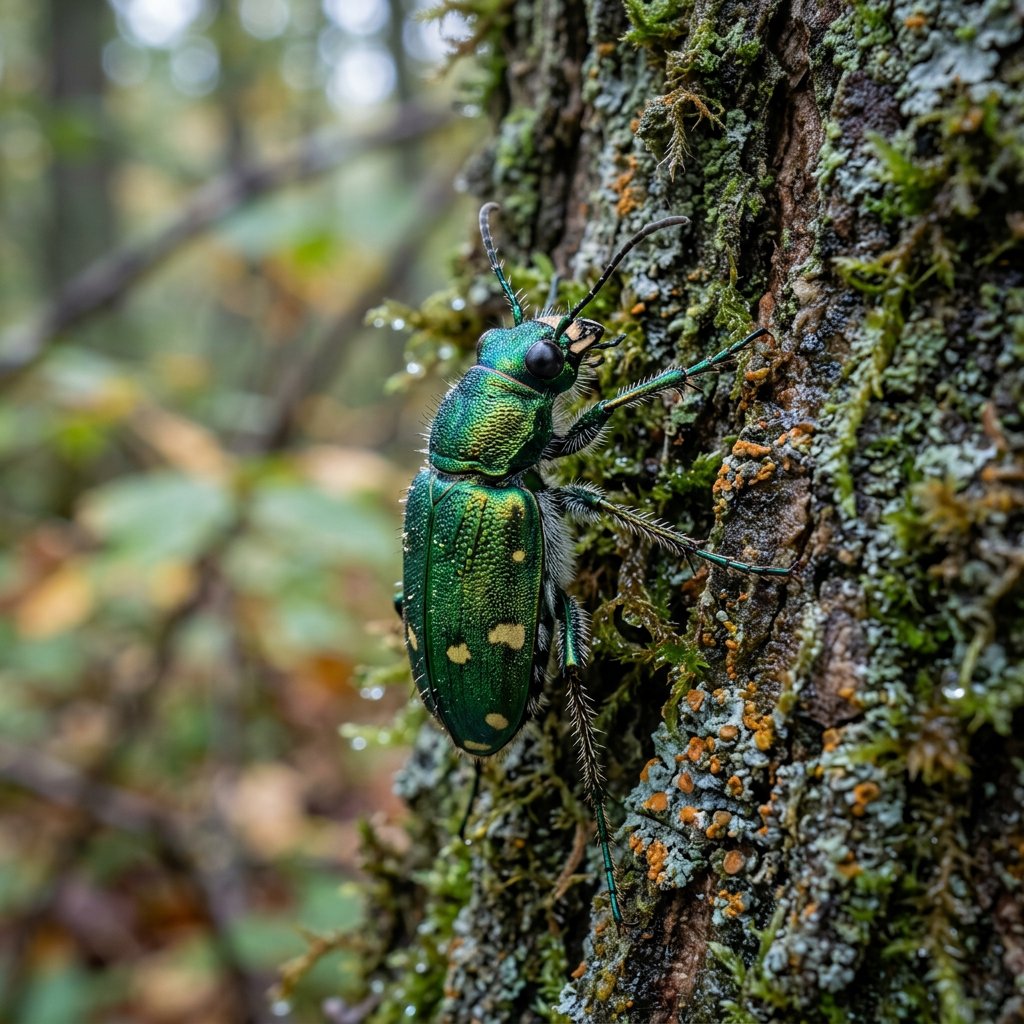
Often called the Lunar Rove Beetle, this striking insect is a master of the forest floor's "underworld." With its sleek, elongated body and bold colors, it looks like a miniature predator dressed for a gala. Far from being a pest, this beetle is a beneficial "cleanup crew" member that spends its life patrolling mushrooms and decaying wood for smaller intruders.
🔍 How to Identify
- 🌙 Crescent Markings: Its species name, lunulatus, refers to the pale, moon-shaped or crescent markings typically found on its dark wing covers (elytra).
- 🧥 The "Short Jacket": Like most rove beetles, its wing covers are very short, leaving most of its segmented abdomen exposed, giving it a sleek, flexible appearance.
- 📐 Spindle Shape: The body is distinctly tapered at both ends, allowing it to navigate through the tight gills of a mushroom or narrow crevices in bark with ease.
🌲 Habitat & Ecology
- 🍄 The Mushroom Hunter: You will most likely encounter this beetle on or inside fleshy wild mushrooms. It isn’t there to eat the fungi, though; it is a fierce predator of the fly larvae (maggots) that try to consume the mushroom.
- 🍂 Forest Floor Resident: When it isn't hunting in fungi, it hides in leaf litter or under damp logs, playing a vital role in balancing the populations of soil-dwelling insects.
⚠️ Safety & Toxicity
- 🛡️ The Scorpion Bluff: When threatened, the Lunar Rove Beetle will curl its abdomen upward, mimicking a scorpion. Don't be fooled—it has no stinger and is completely harmless to humans.
- 🐜 Bite Risk: While it has mandibles for hunting small larvae, it is too small to bite a human effectively. It is not considered toxic to pets or children, though it's always best to observe rather than handle.
✨ Fun Fact
Despite having such short wing covers, the Lunar Rove Beetle is a capable flier! It keeps its large, delicate wings intricately folded underneath those tiny "jacket" covers, unfolding them in a split second when it needs to take to the skies.
More Details








