Info
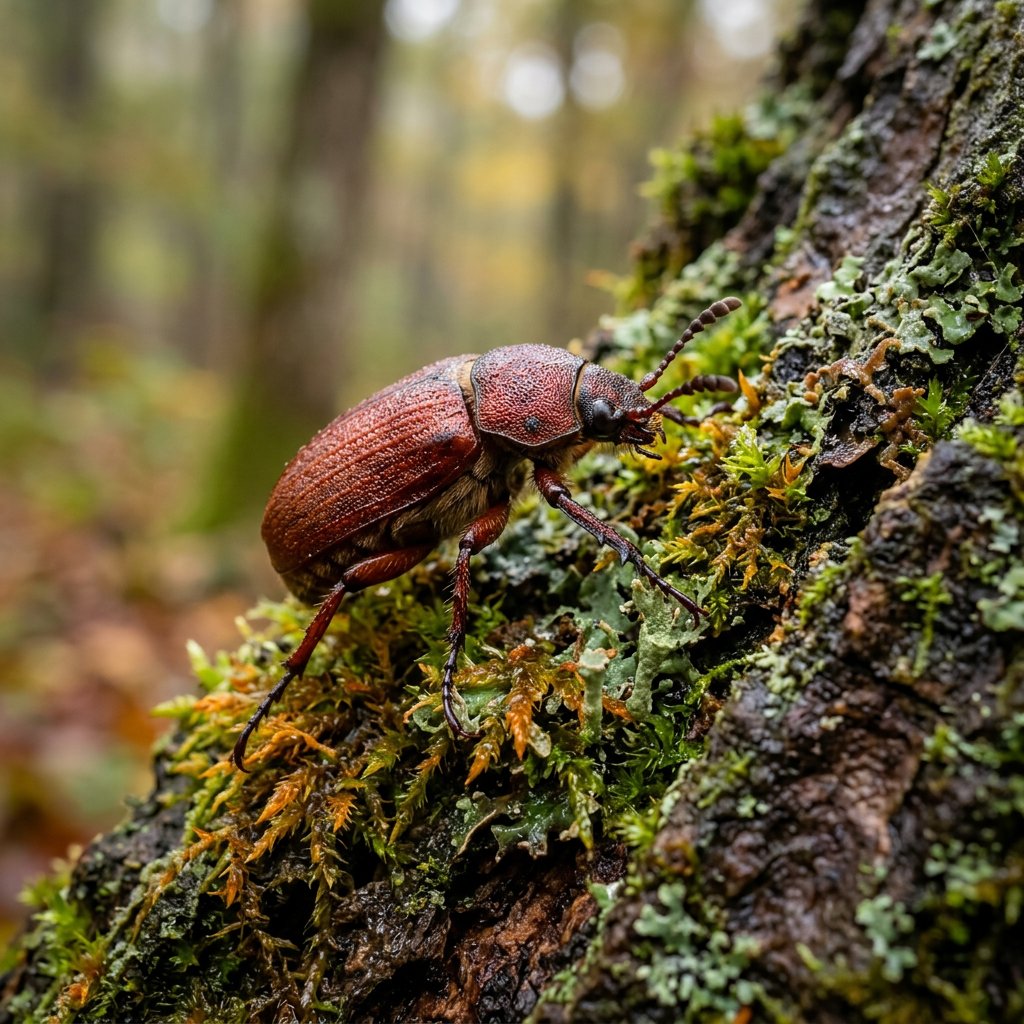
The Red-bodied Dung Beetle is a tiny but tireless janitor of our pastures and meadows. Often overlooked due to its small size, this shiny scavenger plays a crucial role in recycling nutrients back into the earth. While it belongs to the famous scarab family, it is a "dweller" rather than a "roller," preferring to live right inside its food source rather than pushing it across the landscape.
🔍 How to Identify
- 🪲 Oval Silhouette: It possesses a classic beetle shape—stout, convex, and oval—measuring only about 4 to 6 millimeters in length.
- 🔴 Rich Coloration: True to its name (rufus meaning reddish), it features a glossy, deep orange to reddish-brown thorax and wing covers that shine under direct light.
- 📏 Grooved Wings: The elytra (wing covers) are marked with fine, longitudinal parallel lines filled with tiny, microscopic punctures that give it a textured appearance upon close inspection.
🌲 Habitat & Ecology
- 🐄 The Pasture Life: You will almost exclusively find these insects in grazing lands. They are attracted to the droppings of cattle, horses, and sheep, where they perform the "dirty work" of decomposition.
- 🍂 Late Season Specialist: While many insects peak in mid-summer, Bodilopsis rufus is often most active in the late summer and throughout the autumn (July to October), filling an important seasonal gap in the ecosystem.
- 🚜 Soil Aerator: By tunneling into organic matter, these beetles help move nutrients deeper into the ground, acting as a natural fertilizer and improving soil structure for the grass above.
⚠️ Safety & Toxicity
- 🛡️ Safe Friend: This insect is entirely harmless to humans and pets. It does not possess a stinger, and its mouthparts are far too small and weak to bite a person.
- 🧼 Hygiene Context: Because these beetles spend their lives in animal waste, they are not "clean" in a domestic sense. If children handle them, a simple hand-washing afterward is recommended to prevent the spread of bacteria found in their habitat.
✨ Fun Fact
Many species in this family are "astronavigators." While Bodilopsis rufus is most active at dusk, its relatives have been proven to use the Milky Way and the polarization of moonlight to navigate in straight lines across the field!
More Details








