Info
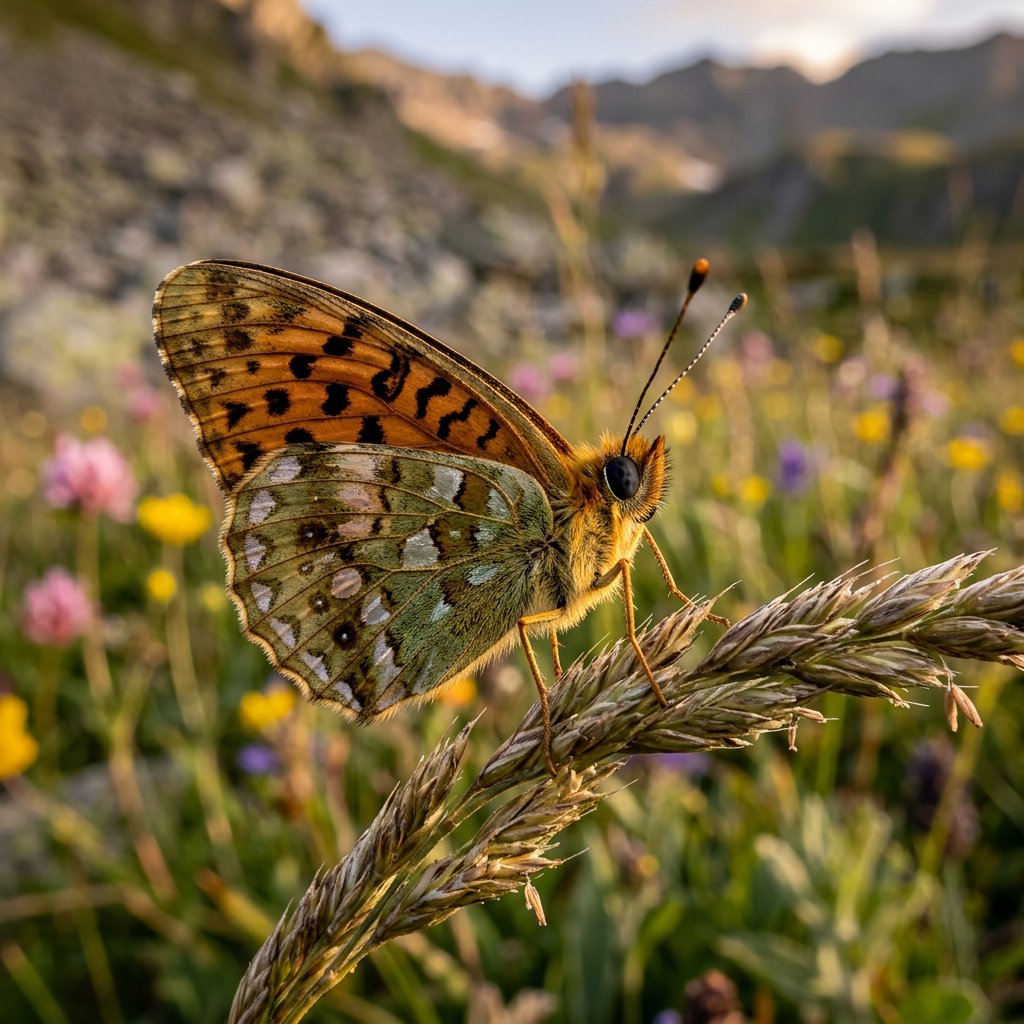
Named after the ethereal Queen of the Fairies from Shakespeare's A Midsummer Night's Dream, Titania’s Fritillary (Boloria titania) is a gem of the insect world. Though you may have been looking for a plant, this butterfly is inextricably linked to the flora it inhabits, dancing through damp alpine meadows and woodland glades. It is a symbol of pristine, high-altitude ecosystems across Europe, Asia, and North America.
🔍 How to Identify
- 🦋 Wing Patterns: The upper side of the wings is a vibrant tawny orange, heavily decorated with black spots, dashes, and a distinct "chequered" border.
- 🎨 The "Purple" Underside: Its most defining feature is the underside of the hindwing, which features a beautiful wash of purplish-maroon or violet-red, interspersed with white and silver-yellow triangles.
- 📏 Size and Shape: A medium-sized butterfly with a wingspan of about 33–44mm; it has more rounded wing edges compared to its larger "Silver-washed" cousins.
🌲 Habitat & Ecology
- 🌸 The Violet Connection: This butterfly is a "specialist." Its larvae (caterpillars) feed almost exclusively on Violets (Viola) and Alpine Bistort (Bistorta officinalis). Without these specific plants, the butterfly cannot survive.
- 💧 Damp Environments: Unlike some butterflies that love dry heat, Titania’s Fritillary prefers moisture. You will most likely find it in boggy meadows, damp forest edges, or near mountain streams where the air stays cool and humid.
- 🐝 Pollination Role: As an adult, it is an active pollinator, favoring purple and nectar-rich flowers like Thistles, Knapweed, and Brambles.
⚠️ Safety & Toxicity
- ✅ Harmless: Titania's Fritillary is a "friend" to the garden and the hiker. It possesses no sting, no bite, and is not known to be toxic if touched.
- 🛡️ Fragile Beauty: The main safety concern is for the butterfly itself. They are sensitive to habitat loss and pesticide use. If you spot one, it is a sign of a very healthy, spray-free environment.
✨ Fun Fact
In some regions, this butterfly is known as the "Purple-edged Fritillary." It is considered a "glacial relict," meaning its populations stayed behind in cool mountain pockets after the last Ice Age ended, while the rest of the world warmed up!
More Details








