Info
Meet the Black-and-gold Bumble Bee, a "golden-haired" giant of the prairie and backyard alike. Despite its deep, low-frequency buzz that might sound intimidating, this bee is a gentle heavy-hitter in the world of pollination. Often seen patrolling meadows with a slow, methodical flight, it is one of the larger bumble bee species in North America, acting as a vital link in the health of our local ecosystems.
🔍 How to Identify
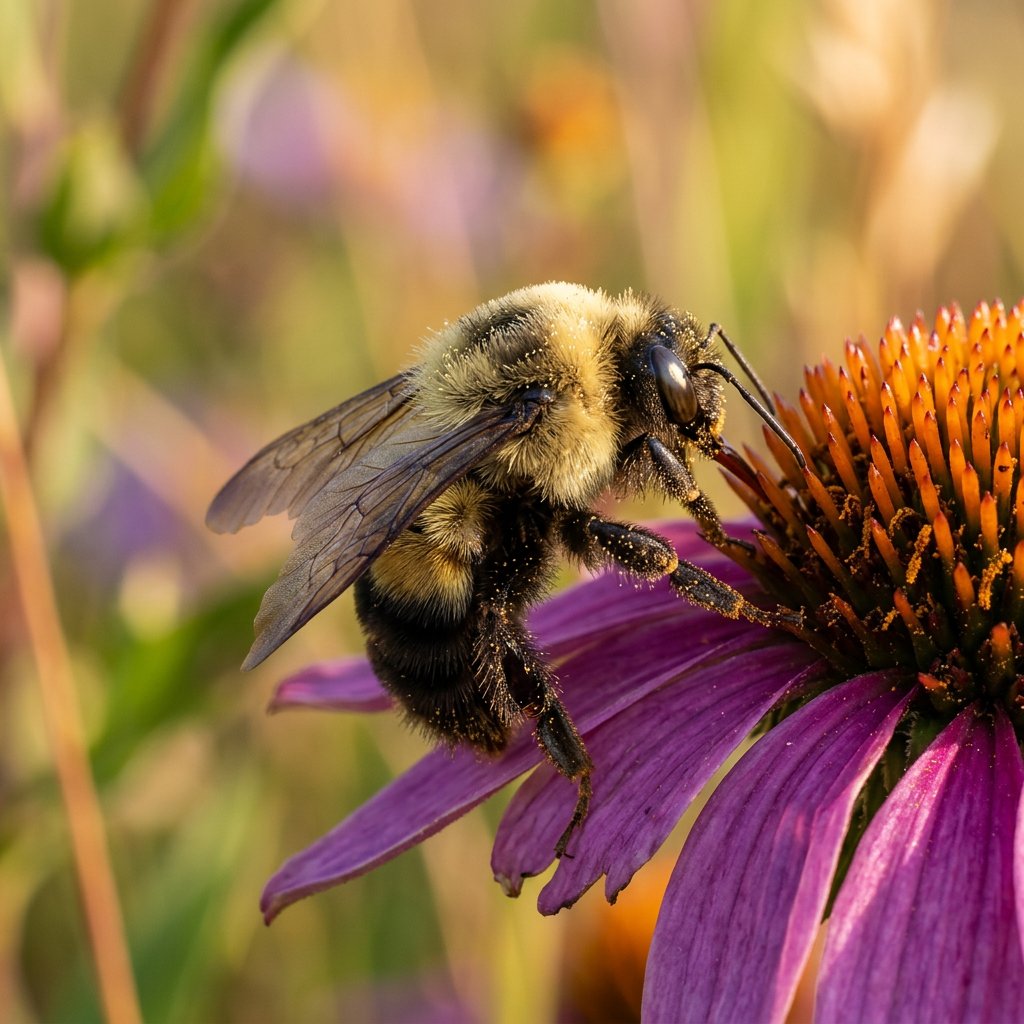
- 🐝 Thorax Pattern: Look for a large, velvety yellow patch on its upper back, often featuring a distinct black "spot" or circle right in the center.
- 🟡 Abdominal Bands: Unlike many bees that have alternating stripes, this species typically has yellow on the first and second segments of its abdomen, while the rest of the tail is solid, deep black.
- 👀 Large Eyes: This bee has notably larger eyes than many of its cousins, especially the males, which use their enhanced vision to spot potential mates from a distance.
🌲 Habitat & Ecology
- 🌻 Flower Preferences: They are specialized "buzz pollinators" who love deep-throated flowers. You will frequently find them clinging to thistle, red clover, and wild bergamot, vibrating their wings to shake loose stubborn pollen.
- 🏠 Nesting Style: They aren't great fans of heights; they usually build their nests on the surface of the ground in tall, matted grass or move into abandoned rodent burrows.
- 🌾 Prairie Resident: While they visit gardens, they are most at home in open fields and grasslands where there is a steady succession of blooming wildflowers from spring through autumn.
⚠️ Safety & Toxicity
- 🛡️ Status: Non-aggressive and generally safe for gardeners.
- ✋ Details: Only the females have stingers, but they are very reluctant to use them. They will generally only sting if their nest is directly stepped on or if they are caught in a hand. They lack the "guard dog" aggression found in yellowjackets or honeybees.
✨ Fun Fact
The scientific name auricomus literally translates from Latin as "golden-haired," referring to the plush, crown-like yellow fuzz that makes this bee look like it's wearing a royal golden fleece.
More Details








