Info
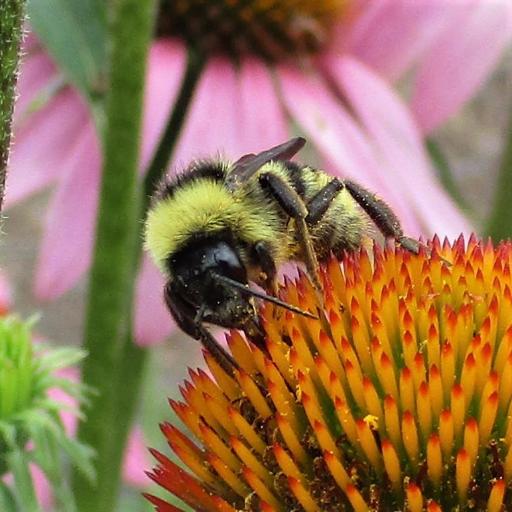
Known as Fernald’s Cuckoo Bumble Bee, this golden-fuzzed traveler is the "secret agent" of the insect world. Unlike most bumble bees that work tirelessly to build a colony, this species lives a life of intrigue, infiltrating the nests of other bees to raise its young. It is a master of disguise and a fascinating example of nature’s more "pirate-like" survival strategies.
🔍 How to Identify
- 🐝 Smooth Hind Legs: Unlike most bumble bees, Bombus flavidus lacks "pollen baskets" (corbiculae). Their hind legs are rounded, hairy, and smooth because they never need to carry pollen back to a nest.
- 🧥 Golden Armor: They are heavily cloaked in lemon-yellow hair, often with a distinctive black "V" or patch between the wing bases and a high proportion of yellow on the abdomen.
- 🛡️ Tough Cuticle: If you were to look very closely, you’d notice their exoskeleton is thicker than a standard bee's. This acts as "body armor" to protect them during the dangerous process of invading a host nest.
🌲 Habitat & Ecology
- 🕵️ The Brood Parasite: This bee does not have a "worker" class. A female Bombus flavidus will find the established nest of another bumble bee species, sneak inside, and either kill or submerge the resident queen to take over the colony’s workforce.
- 🌸 Solo Foraging: Because they don't have to provide for a thousand hungry larvae, you will usually see them flying solo, lazily sipping nectar from flowers like Clovers, Goldenrods, and Asters to fuel their own flight.
⚠️ Safety & Toxicity
- 🐝 Non-Aggressive: While females do have a stinger, they are generally very docile toward humans. They don't have a massive hive of their own to defend, so they are much more likely to fly away than to attack.
- 🛡️ Low Risk: They pose no threat to pets or children unless they are physically stepped on or squeezed. They are solitary spirits that prefer to keep to the flowers.
✨ Fun Fact
In the world of Fernald’s Cuckoo Bumble Bee, there is no such thing as a "blue-collar worker." Every single egg the queen lays is destined to become either a new queen or a male, leaving the "stolen" host workers to do all the chores and childcare!
More Details








