Info
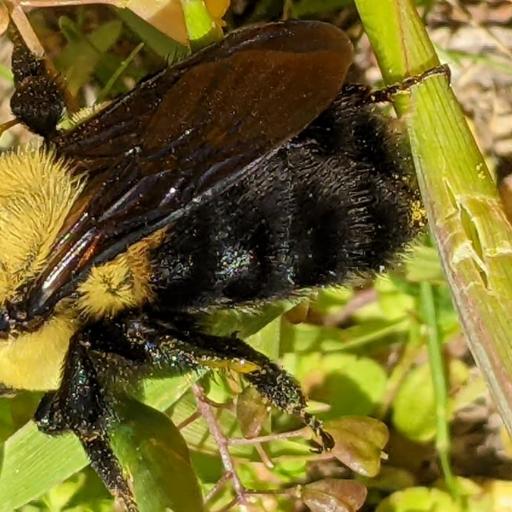
Often referred to as the Brown-belted Bumble Bee, this fuzzy flier is one of the most common and resilient pollinators found across North America. Unlike some of its more sensitive cousins, this bee thrives in urban gardens and agricultural fields, acting as a tireless "winged gardener" from the first bloom of spring until the late frosts of autumn.
🔍 How to Identify
- 🐝 The Signature Belt: The most distinct feature is a crescent-shaped patch of brownish-yellow or "rust" colored hair on the second segment of its abdomen, which gives it its name.
- 🟡 Thorax Pattern: It typically sports a yellow thorax with a prominent, circular black spot in the center, making it look like it’s wearing a tiny, fuzzy vest.
- 👀 The Eyes of the Male: Males of this species have noticeably larger, bulging eyes compared to the females, which helps them spot potential mates while hovering over meadows.
🌲 Habitat & Ecology
- 🌻 Generalist Pollinator: These bees aren't picky eaters; they are generalists that visit a massive variety of flowers, including milkweed, sunflowers, and clover, making them essential for a healthy backyard ecosystem.
- 🏠 Low-Profile Nesting: Unlike honeybees that live in high hives, the Brown-belted Bumble Bee usually nests on the ground surface or in abandoned rodent burrows, hidden safely beneath tufts of grass or leaf litter.
- 🛡️ Resilience: This species is notably more adaptable to human-altered landscapes than other bumble bees, which has helped its population remain stable even as other pollinators face declines.
⚠️ Safety & Toxicity
- 🟢 Status: Generally Harmless and Docile.
- 🛡️ Behavior: This bee is a "gentle giant." It is not aggressive and will only sting if it feels its life is in immediate danger or if you step directly on its nest.
- 🐾 Pets & Kids: While the sting is painful (similar to a wasp), it is not toxic unless the individual has a specific allergy. Keep an eye on curious pets who might try to "snap" at them in the garden.
✨ Fun Fact
Brown-belted Bumble Bees are "short-tongued" bees. When they encounter a long flower they can't reach the bottom of, they sometimes practice "nectar robbing"—they bite a hole in the base of the flower to steal the nectar without actually pollinating the plant!
More Details








