Info
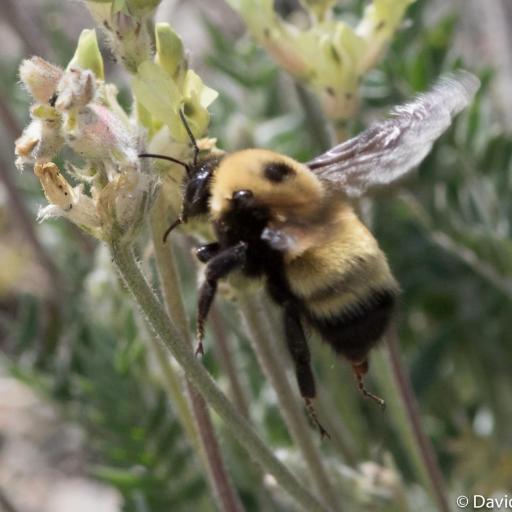
The Nevada Bumble Bee (Bombus nevadensis) is a fuzzy titan of the Western landscape. Often called the "Gentle Giant" of the bee world, this insect is hard to miss due to its impressive size and striking golden-yellow coat. While its loud buzz might sound intimidating, this bee is a peaceful power-pollinator essential to the health of mountain meadows and prairie gardens alike.
🔍 How to Identify
- 🐝 Imposing Size: This is one of the largest bumble bee species in North America; the queens, in particular, can reach over an inch in length.
- 🎨 Golden Pattern: It features a dense, velvety patch of yellow hair on the thorax and the first three segments of the abdomen, usually ending in a starkly contrasting black tail.
- 👃 The Long Face: Unlike many of its cousins, it has a notably elongated head and an exceptionally long tongue, specifically evolved for deep flowers.
🌲 Habitat & Ecology
- 🌸 Deep-Flower Specialist: Because of its long tongue, it acts as a specialist pollinator for plants with tubular flowers, such as penstemons, clovers, and thistles, that smaller bees simply cannot reach.
- 🏠 Subterranean Homes: You won't find their nests hanging from trees. They are ground-dwellers that typically build their colonies in abandoned rodent burrows or thick clumps of dry grass.
- 🗺️ Wide Range: While named after Nevada, they are found across the Western United States and Canada, frequently hovering over sagebrush steps and high-altitude meadows.
⚠️ Safety & Toxicity
- 🛡️ Peaceful Pollinator: These bees are remarkably docile. They are far more interested in nectar than humans and will generally only sting if they are stepped on or if their nest is physically disturbed.
- 💉 Sting Capability: Only the females (workers and queens) have stingers. Unlike honeybees, they do not have barbs on their stingers, meaning they can technically sting multiple times—though they rarely find a reason to do so.
- 🐕 Pet Safety: Keep curious dogs away from ground-nesting sites; a dog digging into a nest may trigger a defensive swarm.
✨ Fun Fact
Nevada Bumble Bees are high-altitude athletes! To fly in the chilly morning air of the Rockies or the Sierras, they "shiver" their powerful flight muscles to raise their internal body temperature to over 86°F (30°C) before taking off.
More Details








