Info
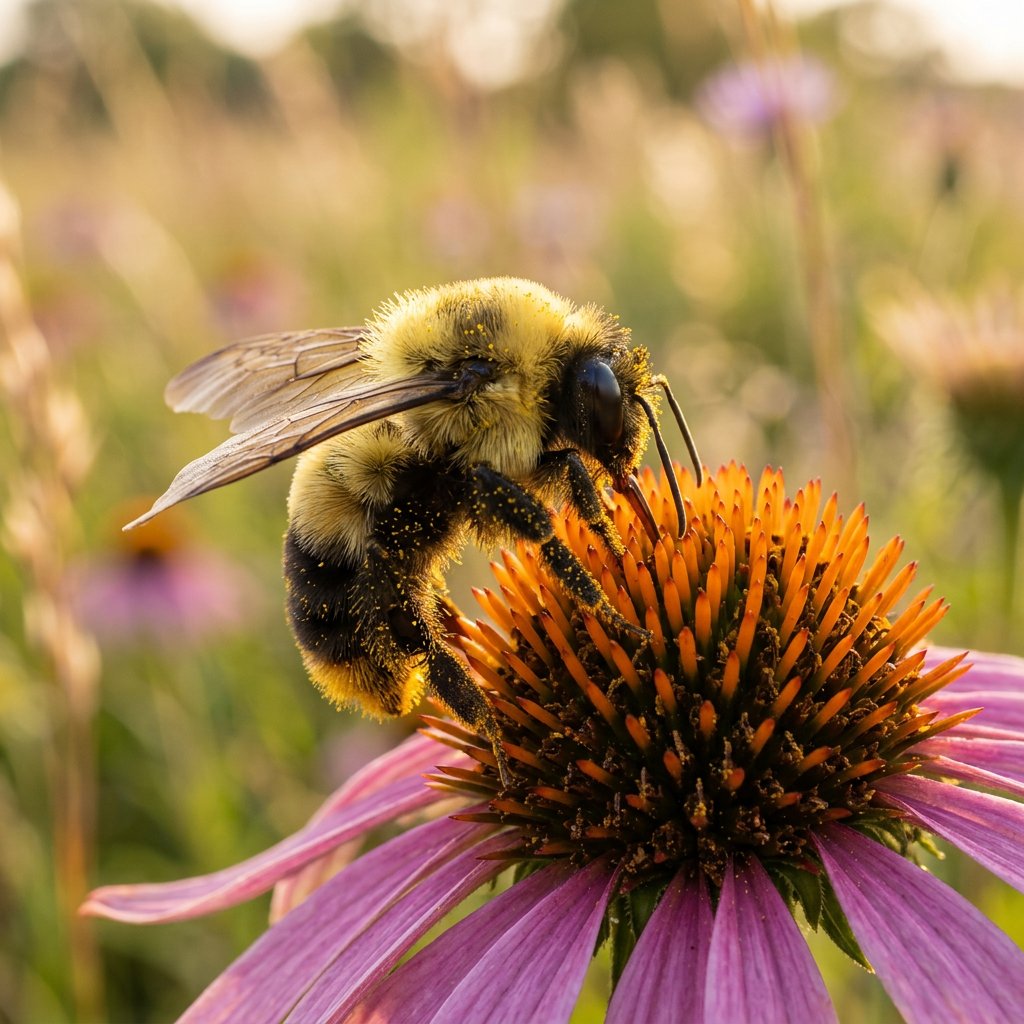
Often called the "gentle giant" of the prairie, the American Bumble Bee is a vital native pollinator that looks like a fuzzy, flying teddy bear. While their loud, deep hum might sound intimidating as they zoom past your ear, these bees are peaceful neighbors far more interested in nectar than humans. Once one of the most common sights in North American fields, they are now a species of conservation concern, making a visit to your garden a truly special event.
🔍 How to Identify
- 🐝 Striped Pattern: They feature a distinct yellow-black-yellow pattern. The front of the thorax is yellow, while the abdomen starts with yellow segments and usually ends in a black "tail."
- ☁️ Clouded Wings: Unlike the crystal-clear wings of many common flies, this bee has smoky, dark-tinted wings that look elegant in flight.
- 🧸 Velvety Texture: Their entire body is covered in dense, "shaggy" hair which helps them collect pollen and stay warm in cooler temperatures.
🌲 Habitat & Ecology
- 🌻 The Power of "Buzz": This bee is a master of sonication, or "buzz pollination." They grab onto a flower and vibrate their flight muscles to shake pollen loose—a technique required for plants like tomatoes and blueberries that honeybees simply cannot manage.
- 🏠 Hidden Homes: Unlike honeybees that live in elevated hives, the American Bumble Bee prefers the "basement" life. They typically nest underground in abandoned rodent burrows or deep within thick clumps of tall, undisturbed grass.
- 🌾 Generalist Diet: They aren't picky eaters; they visit a wide variety of flowers, from clover and goldenrod to garden beans, making them a gardener's best friend.
⚠️ Safety & Toxicity
- 🛡️ Docile Status: They are naturally non-aggressive. A bumble bee will generally only sting as a last resort if it is pinched, stepped on, or if its nest is directly attacked.
- 🚫 Pet & Child Safety: While they do possess a stinger, they lack the "territorial" aggression of yellowjackets. They are safe to observe from a few inches away, but children should be taught not to try and pet them, as the fuzzy texture can be tempting!
✨ Fun Fact
🎓 Master Students: Researchers have discovered that American Bumble Bees are incredibly intelligent. They can solve complex "puzzle boxes" to get sugar water and can even learn how to perform new tasks just by watching other bees in their colony!
More Details








