Info
Known as the Sparse-haired Bumblebee, Bombus sporadicus is a sturdy, cold-hardy resident of the northern taiga and boreal forests. While many bees prefer the warmth of a garden, this fuzzy giant thrives in the rugged landscapes of Scandinavia and Northern Eurasia. It is often celebrated as a silent guardian of wild berries, ensuring that the forest floor remains bountiful season after season.
🔍 How to Identify
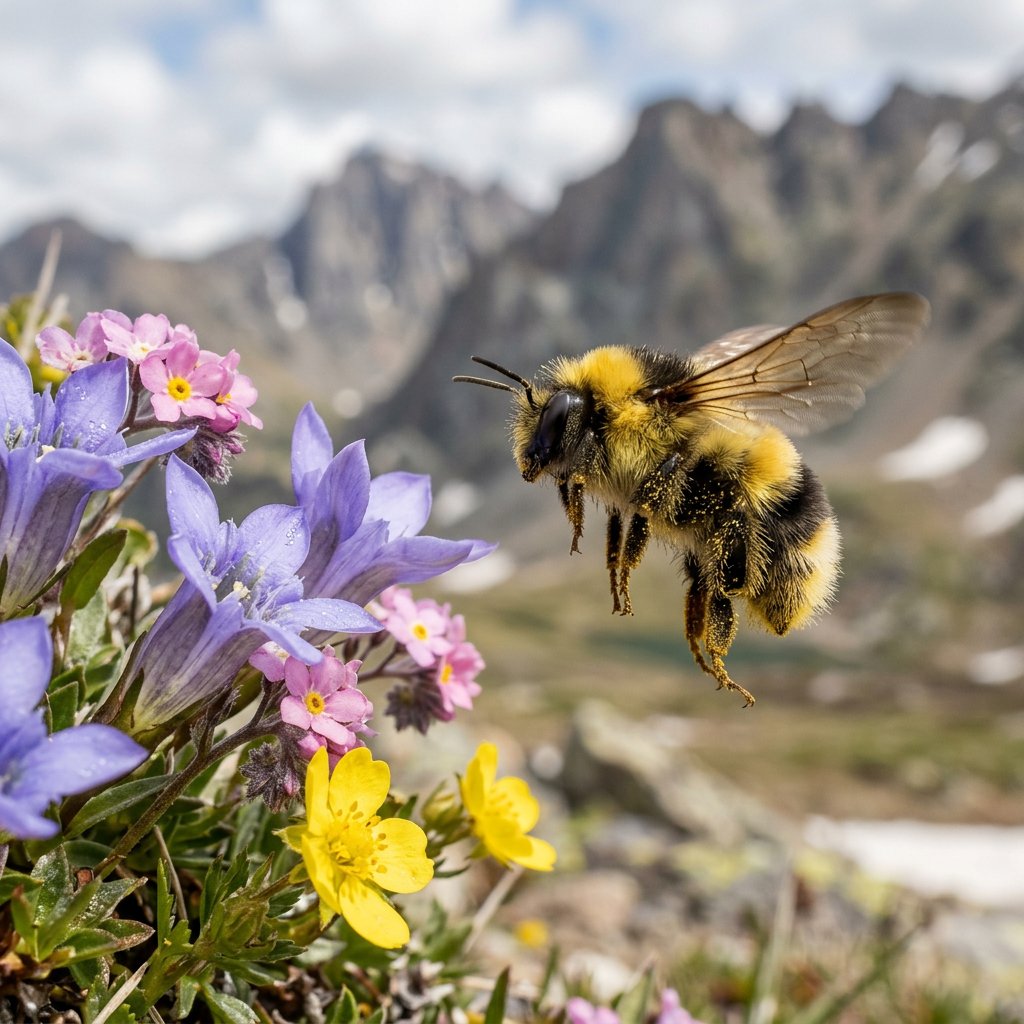
- 🐝 Body Shape: It has a large, robust, and exceptionally "fluffy" appearance, even compared to other bumblebees, which helps it stay warm in chilly northern climates.
- 🎨 Color Pattern: It typically features two distinct yellow bands on its black thorax and a striking, clean white tip at the end of its abdomen (the "tail").
- 👅 Long Tongue: Look for its specialized long proboscis, which allows it to reach nectar in deep, bell-shaped flowers that other insects can't access.
🌲 Habitat & Ecology
- 🫐 Forest Specialist: This bee is a primary pollinator for forest floor favorites like Bilberries, Lingonberries, and Heather. If you see a bumper crop of wild berries, you likely have these bees to thank.
- 🐭 Underground Architect: Unlike honeybees, they are solitary-minded socialites that prefer nesting underground. They frequently take over abandoned rodent burrows to start their colonies in the spring.
- 🗺️ Northern Range: It is rarely found in urban gardens further south, preferring the crisp air of pine forests and high-latitude shrublands.
⚠️ Safety & Toxicity
- 🛡️ Status: Gentle and Non-Aggressive. Like most bumblebees, Bombus sporadicus is quite docile and is far more interested in flowers than humans.
- 针 Stinging Capability: They do possess a stinger but will only use it as a last resort if they are stepped on or if their nest is directly disturbed.
- 🐾 Pets & Kids: They are generally safe to have around. However, curious pets should be kept away from ground nests to avoid accidental stings which can cause localized swelling.
✨ Fun Fact
- ❄️ The Shivering Engine: Bombus sporadicus can "vibrate" its wing muscles without moving its wings to generate heat. This allows it to fly and forage when temperatures are just above freezing, long before other bees have even woken up!
More Details








