Info
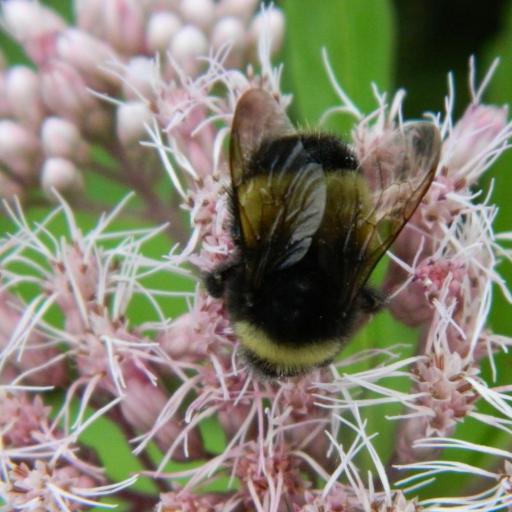
Often called the Yellow-banded Bumblebee, this fuzzy powerhouse is a true icon of North American gardens and woodlands. While it might look like a flying gold-and-black teddy bear, it is actually one of our most important—and unfortunately, increasingly rare—native pollinators. Seeing one is a treat for any nature lover, as they are the master acrobats of the floral world.
🔍 How to Identify
- 🐝 The Signature Band: Look for a distinct yellow band on the second and third segments of the abdomen, sandwiched between jet-black sections at the front and rear.
- 🧶 Fuzzy Texture: Its entire body is covered in dense, velvety hair that helps it collect pollen and stay warm during chilly early-spring mornings.
- 🧺 Pollen Baskets: On the hind legs of females, you’ll notice shiny, concave plates (corbiculae) often packed with bright orange or yellow balls of moistened pollen.
🌲 Habitat & Ecology
- 🌸 The "Buzz" Specialist: These bees use a technique called "sonication" or buzz pollination. They grab a flower and vibrate their wing muscles at a high frequency to shake loose pollen that other insects simply can't reach.
- 🏠 Earth Dwellers: As the name terricola (earth-dweller) suggests, they prefer to live underground. They typically repurpose abandoned rodent burrows or find cozy spots beneath thick layers of leaf litter.
- 🫐 Forest Friend: They are critical for the survival of wild berries, such as blueberries and cranberries, as well as many native woodland wildflowers.
⚠️ Safety & Toxicity
- 🛡️ Docile Defender: These bees are "friends" and are remarkably peaceful. They will generally ignore humans and pets entirely while foraging, focusing solely on their work.
- 💉 The Sting: Only the females possess a stinger. While they can sting if the nest is stepped on or if they are squeezed, they are far less aggressive than yellowjackets or hornets. For most people, a sting causes temporary pain, but those with bee allergies should always keep a safe distance.
✨ Fun Fact
Because they have relatively short tongues, these clever bees sometimes engage in "nectar robbing." If a flower is too deep for them to reach the nectar normally, they use their mandibles to bite a hole in the base of the bloom and "steal" the sugar without providing any pollination services in return!
More Details








