Info
Known as the Vancouver Bumble Bee, this fuzzy high-altitude specialist is a charismatic icon of Western North American landscapes. Whether they are buzzing through coastal gardens or alpine meadows, these bees are the "mountain hikers" of the pollinator world, built to withstand cooler temperatures that would keep other insects grounded. While they might look like tiny flying teddy bears, they are actually highly efficient biological engines driving the health of our ecosystems.
🔍 How to Identify
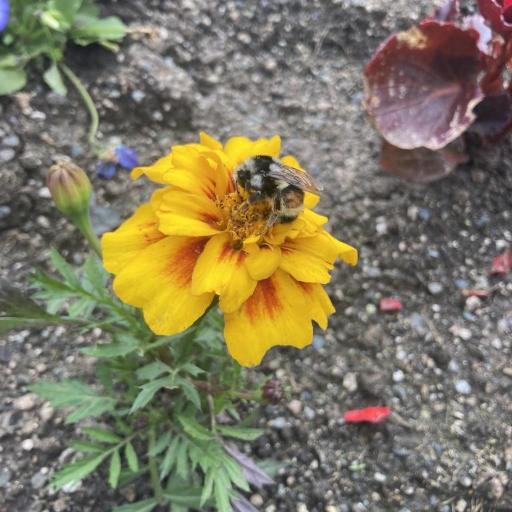
- 🎨 Color Polymorphism: This species is famous for having two "looks." Some individuals sport a striking bright orange band across the middle of their abdomen, while others are strictly dressed in classic lemon-yellow and velvety black.
- 🧶 The "V" Pattern: Look closely at the thorax (the middle section); you will often see a distinct black "V" or wedge shape cutting into the yellow hair, which is a key ID feature for this group.
- 📏 Compact Build: They are small-to-medium-sized bumble bees with a dense, plush coat of hair that acts like a parka, allowing them to fly in chilly morning fogs.
🌲 Habitat & Ecology
- 🌸 Generalist Foragers: These bees aren't picky eaters. They are critical pollinators for a massive variety of plants, ranging from backyard snapdragons and lavender to wild mountain lupines and asters.
- 🏠 Subterranean Suites: Unlike honeybees that build wax hives in the open, the Vancouver Bumble Bee prefers a cozy basement. They typically nest underground, often moving into abandoned rodent burrows to start their seasonal colonies.
⚠️ Safety & Toxicity
- 🐝 Gentle Giant: Like most bumble bees, they are remarkably docile. They are focused entirely on their floral "work" and will generally ignore humans unless they are stepped on or their nest is disturbed.
- 🩹 Smooth Stinger: Only the females possess a stinger. Unlike honeybees, their stinger is smooth, meaning they can sting multiple times if threatened, though they would much rather fly away to the next flower.
✨ Fun Fact
For over 150 years, scientists thought this bee was just a subspecies of the "Two-form Bumble Bee." However, recent DNA "detective work" proved it is a unique species entirely, leading to its official recognition as Bombus vancouverensis!
More Details








