Info
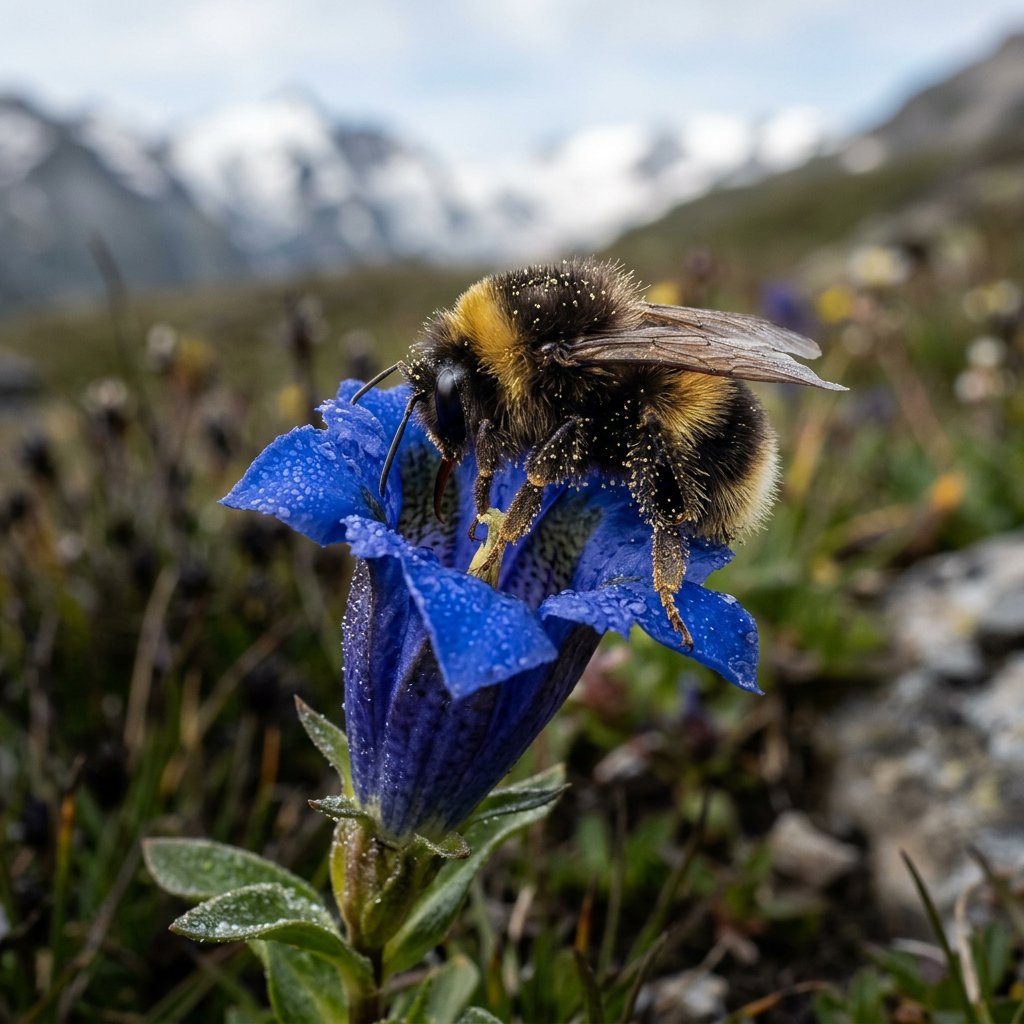
Known as the Bearded Mountain Bumblebee, Bombus wurflenii is the rugged mountaineer of the bee world. Found predominantly in the high-altitude meadows of Europe and Western Asia, this fuzzy flyer is famous for its "tough guy" approach to foraging. Instead of playing by the rules of pollination, it often takes a shortcut to get its sugary rewards, making it a fascinating subject for mountain hikers and nature enthusiasts alike.
🔍 How to Identify
- 🍑 The Fiery Tail: Look for a distinct, vibrant orange or rusty-red tip at the end of its abdomen, which stands out vividly against its otherwise dark body.
- 🧔 The "Bearded" Face: This species has a notably short, wide head and powerful, toothed mandibles. This gives it a "blunt" facial profile compared to the long-faced garden bumblebees.
- 🧥 Robust Build: It is a large, stocky bee. While mostly black, it usually sports a single yellow-grey band on the collar (the front of the thorax), though the intensity of this color can vary by region.
🌲 Habitat & Ecology
- 🏔️ Alpine Specialist: This bee is an evolutionary masterpiece of the peaks, thriving in the cool, thin air of the Alps, Pyrenees, and Ural Mountains where other insects might struggle to fly.
- 🥷 The Nectar Robber: Because its tongue is relatively short, it cannot reach the nectar inside deep, tubular flowers like Monkshood. Instead, it uses its strong jaws to bite a hole directly into the base of the flower to "steal" the nectar, bypassing the plant's pollination mechanism entirely.
- 🏡 Subterranean Homes: They typically nest underground, often moving into abandoned rodent burrows. A single colony is relatively small, usually consisting of only 80 to 150 hardworking individuals.
⚠️ Safety & Toxicity
- 🐝 Docile Nature: Generally, this bee is a "peaceful giant." It is not aggressive and will completely ignore humans unless it feels its life is in immediate danger.
- 💉 The Sting: Only the females (queens and workers) possess a stinger. While painful, the sting is not more dangerous than a common honeybee's. However, individuals with known bee allergies should maintain a respectful distance.
✨ Fun Fact
Its mandibles are uniquely equipped with specialized "teeth." While most bees use their mouths just for cleaning or building, Bombus wurflenii uses its mouthparts like a pair of bolt cutters to break into tough floral structures that other bees simply can't access!
More Details








