Info
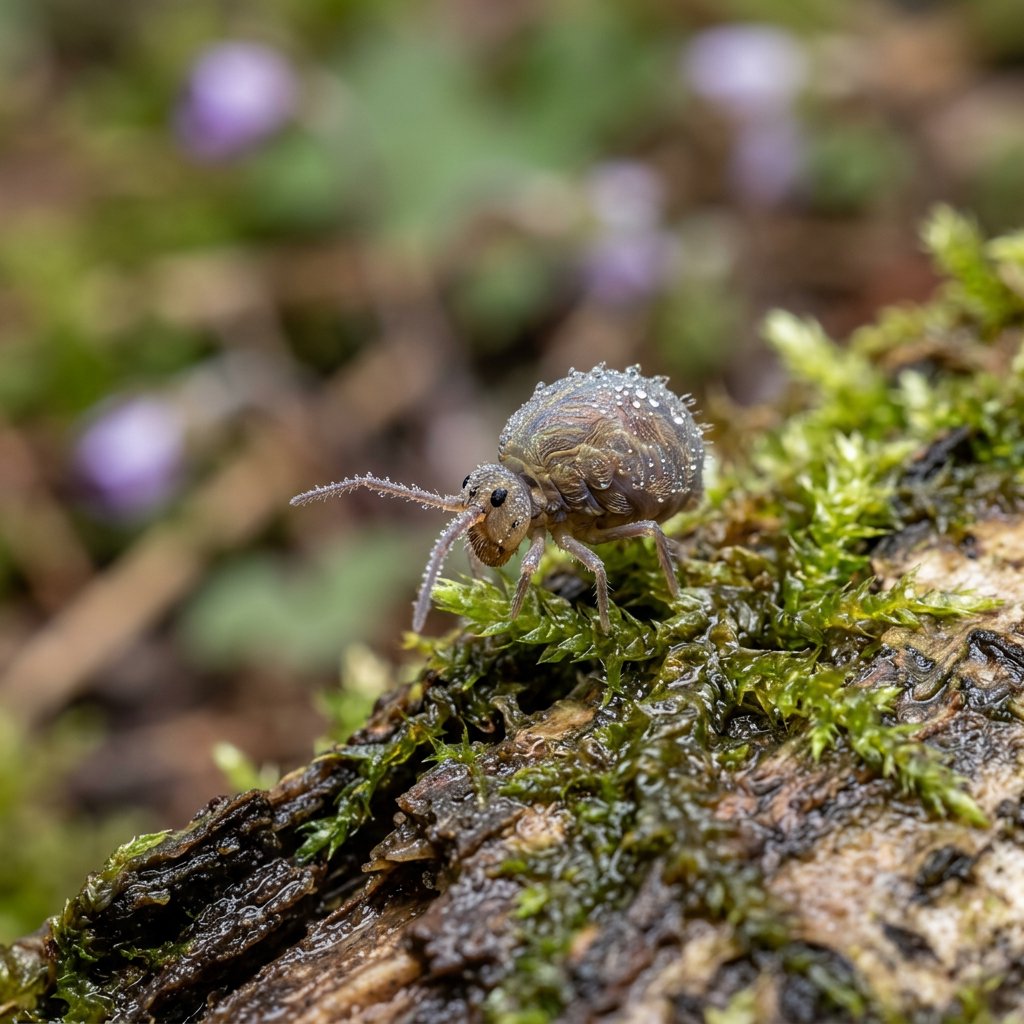
Often called the "Gymnasts of the Soil," the Bourletiellidae are a family of globular springtails that look like tiny, animated marbles. While they might look like miniature beetles or mites at first glance, these hexapods are famous for their "magic trick"—one moment they are sitting on a leaf, and the next, they have vanished into thin air thanks to a high-powered internal spring.
🔍 How to Identify
- 🟢 Body Shape: Unlike the long, slender springtails you might see in compost, these have a distinctively plump, rounded abdomen, giving them a "globular" or pearl-like appearance.
- 🎨 Vibrant Colors: Many species in this family are surprisingly colorful, featuring bright yellows, neon greens, or intricate mottled patterns of purple and brown.
- 🔭 The Furcula: If you look at their underside with a lens, you’ll see a forked "tail" tucked under the belly. This is their spring-loaded escape mechanism.
🌲 Habitat & Ecology
- 🌿 Surface Dwellers: Most Bourletiellidae prefer the "upper world" compared to other springtails. You will often find them wandering across sunlit leaves, flower petals, or active garden soil rather than deep underground.
- 🍽️ The Garden Diet: They are primarily grazers. They spend their days munching on fungal spores, pollen, and algae. By doing this, they help clean the surface of your plants and prevent harmful fungi from taking over.
- 💧 Moisture Seekers: While they enjoy the sun, they are highly sensitive to drying out. You’ll see them most active in the early morning dew or after a light rain.
⚠️ Safety & Toxicity
- ✅ Completely Harmless: Bourletiellidae are "friends" to the gardener. They do not bite, they do not sting, and they do not possess any venom or toxins.
- 🐶 Pet & Child Safe: Because they are so small and lack any defense mechanisms other than jumping, they pose zero risk to curious pets or children.
- 🪴 Plant Impact: They are generally considered neutral or beneficial. While a massive population might occasionally nibble on a very tender seedling, the damage is almost always negligible compared to the nutrient recycling they provide.
✨ Fun Fact
When a globular springtail "jumps," it isn't using its legs. It releases its furcula (the spring tail) with such force that it can accelerate at 100 times the force of gravity, spinning hundreds of times per second mid-air!
More Details








