Info
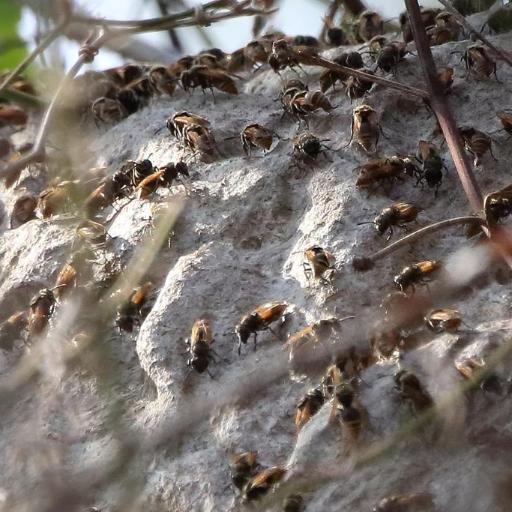
Meet the Mexican Honey Wasp, a rare exception in the insect world that challenges the "wasps are just pests" stereotype. Often called the "Honey-Producing Wasp," these tiny architects are among the very few wasp species in the world that actually produce edible honey. While they might look like your average yellowjacket at a distance, they are vital pollinators and fascinating social engineers.
🔍 How to Identify
- 🐝 Compact Build: These wasps are surprisingly small—usually only 7 to 9 mm long—making them significantly smaller than a standard honey bee.
- 🎨 Abdominal Pattern: They have a dark black or deep brown body accented by thin, bright yellow bands that wrap around a very wide, "chunky" abdomen.
- ✈️ Wing Proportions: Their wings often appear slightly short for their body size, giving them a heavy, busy flight pattern as they move between flowers.
🌲 Habitat & Ecology
- 🏘️ The Paper Fortress: They build large, grayish, teardrop-shaped nests out of a paper-like pulp. Unlike many wasps that hide nests underground, these are usually found hanging high in the canopies of citrus trees or thick shrubs.
- 🌺 Nectar Collectors: While most wasps are purely predatory, the Mexican Honey Wasp is a dedicated nectar forager. They play a crucial role in pollinating avocados and various native wildflowers in Texas, Mexico, and Central America.
- 🐜 Natural Pest Control: They are "beneficial neighbors" for gardeners because they hunt small agricultural pests, like psyllids, to provide protein for their developing larvae.
⚠️ Safety & Toxicity
- 🐝 Docile but Defensive: On a flower, these wasps are very peaceful and rarely sting. However, they are fiercely protective of their honey stores; disturbing a nest can trigger a coordinated swarm response.
- 🚫 The Sting: They possess a typical wasp sting that can be painful and cause localized swelling. Because they do not lose their stinger like honey bees, a single wasp can sting multiple times.
- 🐾 Allergy Warning: If you or your pets are known to be allergic to bee or wasp venom, maintain a "look but don't touch" policy near their nests.
✨ Fun Fact
In many rural communities in Mexico, the honey produced by these wasps is harvested as a local delicacy. It is often described as having a rich, floral flavor that is distinct from the honey produced by traditional bees!
More Details








