Info
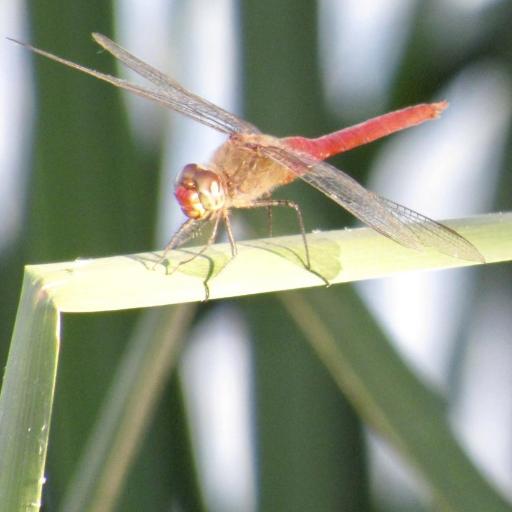
Commonly known as the Red-tailed Pennant, this dragonfly is a splash of ruby-red dancing across the wetlands of the Americas. Its name comes from its peculiar habit of perching on the very tips of tall weeds, swaying in the wind like a tiny, colorful flag or "pennant." While its bright colors might look like a warning, it is a master of the skies and a silent guardian of your garden.
🔍 How to Identify
- 🚩 The "Pennant" Pose: Look for an insect perching horizontally at the very tip of a tall grass blade or twig, often defying strong gusts of wind.
- 🔴 Vibrant Abdomen: Mature males boast a brilliant, fire-engine red abdomen, while females and juveniles are a more camouflaged golden-brown with dark markings.
- 🕸️ Clear Wings: Their wings are mostly transparent with dark veins; look for a subtle yellowish wash near the base of the hindwings, which distinguishes them from some of their cousins.
🌲 Habitat & Ecology
- 🦟 Nature’s Pest Control: These dragonflies are voracious predators. They spend their days patrolling pond edges and garden borders, snatching mosquitoes, gnats, and flies right out of the air with incredible precision.
- 💧 Water Lovers: You’ll mostly find them near still or slow-moving water, like marshes, ponds, or even backyard fountains. They are highly territorial over their favorite perching spots, often chasing away larger dragonflies to defend their "pennant."
⚠️ Safety & Toxicity
- 🛡️ Completely Harmless: The Red-tailed Pennant is a "friend" in every sense. They have no stinger and are not aggressive toward humans or pets; they prefer to flee rather than fight.
- 👄 No Bite Risk: While they have mandibles for eating smaller bugs, they do not bite humans. They are safe to observe closely, making them a favorite for nature photographers and children.
✨ Fun Fact
On extremely hot days, you might see the Red-tailed Pennant pointing its abdomen directly at the sun. This is called the "obelisk posture," and it helps the dragonfly regulate its body temperature by minimizing the surface area exposed to the sun's rays!
More Details








