Info
Often called the Asian Tramp Snail, this little traveler has hitchhiked its way from Southeast Asia to nearly every corner of the globe. While it might look like a slow, harmless garden dweller, it is a master survivor known for its ability to adapt to human-altered landscapes. In the garden, it is often viewed as a silent thief, nibbling on prized ornamentals and vegetable patches under the cover of night.
🔍 How to Identify
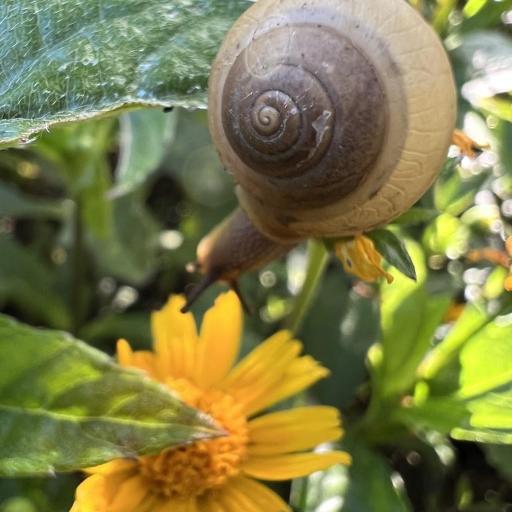
- 🐚 The Shell: A rounded, globose shell usually measuring 12–18mm in diameter. It is typically pale cinnamon, yellowish, or slightly translucent.
- 🎗️ The Band: Many individuals feature a single, thin, reddish-brown spiral band running along the center of the shell whorls, though "plain" versions are also common.
- 🐌 Soft Body: The snail’s body is generally a light grey or creamy beige, featuring two pairs of retractable tentacles; the longer top pair houses its primitive eyes.
🌲 Habitat & Ecology
- 🥬 Generalist Eater: These snails are not picky eaters. They are major agricultural pests that feast on a wide variety of plants, including citrus, grapes, lilies, and leafy greens.
- 🏚️ Urban Dweller: Unlike many wild snails that require deep forests, the Asian Tramp Snail thrives in "disturbed" environments. It is most commonly found under flower pots, in greenhouse crevices, or tucked away in damp garden mulch.
- 🌑 Nocturnal Life: To avoid drying out, they are mostly active at night or during rainy days, spending the heat of the day glued to the underside of leaves to preserve moisture.
⚠️ Safety & Toxicity
- 🧼 Parasite Risk: While they do not bite or sting, this species is a known intermediate host for the Rat Lungworm parasite. You should never handle them with bare hands if possible.
- 🐾 Pet & Child Safety: Ensure children do not put these snails in their mouths. For pet owners, ingesting these snails can lead to parasitic infections in dogs and cats. Always wash your hands thoroughly after gardening in areas where they are present.
✨ Fun Fact
✈️ The World Traveler: It earned the name "Tramp Snail" because of its incredible habit of "hitchhiking." By sealing itself into its shell to survive dry periods, it can endure long sea voyages on shipping containers and nursery plants, allowing it to colonize almost every tropical and subtropical region on Earth!
More Details








