Info
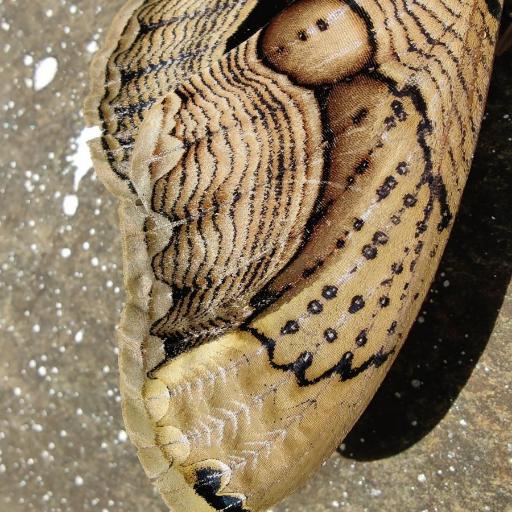
Often called the Brahmin Moth, this giant of the nocturnal world looks like a piece of masterfully carved mahogany or a living wood grain. Native to the mountain forests of Asia, it is famous for its hypnotic, concentric wing patterns that can make a predator (or a human observer) feel quite dizzy. It belongs to an ancient family of moths that has survived relatively unchanged for millions of years, earning it a reputation as a true "living fossil."
🔍 How to Identify
- 🦋 Wing Patterns: Features mesmerizing black, tan, and cream concentric lines that resemble ripples in water or the intricate rings of an old tree.
- 📏 Impressive Span: This is a heavy-bodied moth with a massive wingspan that can reach up to 16 centimeters (over 6 inches).
- 🪵 Camouflage: When resting with its wings flat, the moth mimics the texture of bark or dead leaves so perfectly that it seemingly vanishes against a tree trunk.
🌲 Habitat & Ecology
- 🌑 Nocturnal Life: As a creature of the night, it is most active in deep forests, though it is frequently drawn to porch lights in villages near wooded areas.
- 🍃 Specific Diet: The caterpillars are specialized feeders, munching almost exclusively on the leaves of Privet (Ligustrum), Ash, and Lilac trees.
- ⏳ A Brief Beauty: Once they emerge from their cocoons, the adults do not eat at all. They have vestigial mouthparts, meaning their only goal is to find a mate and lay eggs before their energy reserves run out.
⚠️ Safety & Toxicity
- 🛡️ Harmless Giant: Despite their large size and "spooky" appearance, Brahmin Moths are completely harmless. They do not bite, sting, or carry any toxins.
- 🐛 Intimidating Larvae: The caterpillars look quite alien, with long, whip-like "horns" on their backs. While these look threatening, they are purely for show to scare off birds and are not venomous.
✨ Fun Fact
📜 A Living Fossil: Evolutionary biologists often refer to these moths as "primitive" because their wing venation and patterns have remained largely unchanged for millions of years, providing a window into what moths looked like in the deep past.
More Details








