Info
Known as the Western Grape Rootworm, this small, unassuming beetle is a "ninja" of the vineyard. While it doesn't possess a scary stinger or a painful bite, it is a formidable foe for anyone growing grapes or fireweed. Often overlooked due to its dark, earthy coloring, this beetle plays a high-stakes game of hide-and-seek, spending its youth underground and its adulthood feasting on foliage.
🔍 How to Identify
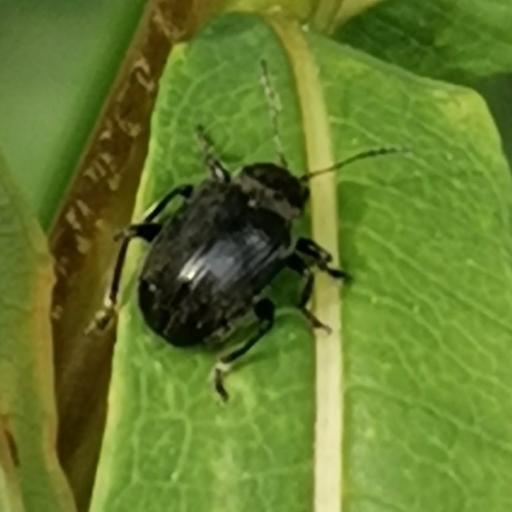
- 🪲 The "Dusty" Shell: Adults are small (about 5–6 mm) and typically matte black or deep reddish-brown. Their bodies are covered in fine, silky, grayish-white hairs that give them a slightly frosted or "dusty" appearance.
- 🛡️ The Hunchback Profile: They have a distinct, robust body shape with a thorax (the middle section) that is noticeably narrower than their wing covers, giving them a slightly hunched look.
- 🌿 Signature Leaf Art: You can often identify their presence by the damage they leave behind—unique, linear "chain-stitch" holes eaten into leaves, rather than large circular chunks.
🌲 Habitat & Ecology
- 🍇 The Vineyard Specialist: As the name suggests, their favorite habitat is anywhere grapevines thrive, but they are also frequently found on Epilobium (Fireweed) and Primrose.
- 🪵 A Two-Stage Lifecycle: The adults are the "surface crew," eating leaves and bark during the summer. Meanwhile, their white, C-shaped larvae are the "subterranean crew," living in the soil and feeding on roots, which can significantly weaken the host plant.
- 🍂 Master of Disguise: They are incredibly shy. If you approach a leaf they are sitting on, they will often tuck their legs in and drop to the ground, blending perfectly with the dirt to escape detection.
⚠️ Safety & Toxicity
- ✅ Harmless to Humans: Bromius obscurus is entirely non-toxic and lacks any mechanism to bite or sting people or pets.
- 🚫 A Garden Foe: While safe to handle, they are considered a significant agricultural pest. If you find them in your garden, your primary concern is the health of your grapevines or ornamental plants rather than physical injury.
✨ Fun Fact
When threatened, the Western Grape Rootworm practices "thanatosis"—a fancy scientific word for playing dead. They will remain perfectly still for several minutes until they feel the "predator" (or curious gardener) has moved on!
More Details








