Info
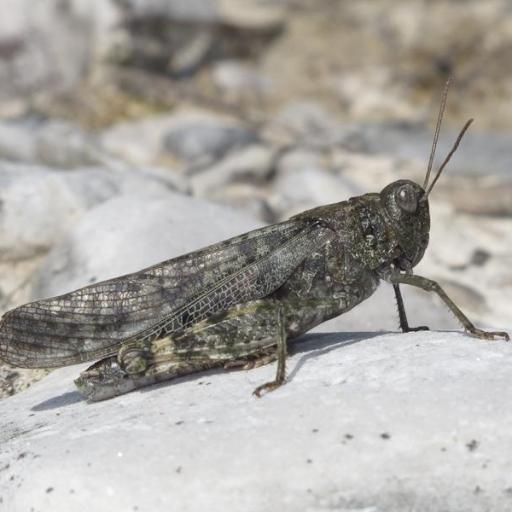
Often referred to as the Snoring Grasshopper, Bryodemella tuberculata is a master of camouflage and a true ghost of the gravelly plains. While it looks like a simple, dusty stone when resting, it transforms into a flash of brilliant color the moment it takes to the air. This rare insect is often considered a "relic" species, surviving in specialized, untouched landscapes across Eurasia.
🔍 How to Identify
- 🪨 The "Bumpy" Back: Its scientific name tuberculata refers to the distinct, sandpaper-like bumps and ridges on its thorax (the middle section), which help it blend perfectly with pebbles.
- 🍂 Mottled Camouflage: The forewings are a mosaic of grey, brown, and yellowish tones, mimicking the exact texture of dry earth and lichen-covered stones.
- 🎈 Hidden Crimson Wings: Its most striking feature is only visible in flight—large, broad hind wings that are a vibrant rose-red or bright pinkish-purple with a dark border.
🌲 Habitat & Ecology
- 🏜️ The Stony Specialist: Unlike common grasshoppers found in lush lawns, this species strictly inhabits sparsely vegetated, rocky areas, such as dry riverbeds, alpine heaths, and glacial gravel plains.
- 🥗 A Gentle Herbivore: It feeds primarily on low-growing mountain plants and grasses. Because it requires very specific, undisturbed thermal conditions to survive, its presence is usually a sign of a very healthy, natural ecosystem.
- 🎶 The "Snoring" Flight: It is famous for "crepitation"—a loud, rattling, or crackling sound produced by its wings during flight. To the human ear, this rhythmic mechanical sound is what earned it its "snoring" nickname.
⚠️ Safety & Toxicity
- ✅ Harmless Friend: This grasshopper is entirely harmless to humans. It does not bite, sting, or carry any toxins.
- 🛡️ Fragile Status: While it is safe for you, you are a threat to it! In many European countries, this insect is highly endangered due to habitat loss. If you spot one, it is best to admire it from a distance without trying to catch it.
✨ Fun Fact
The Snoring Grasshopper is a prehistoric traveler; it is considered a "post-glacial relic," meaning it has lived in the same types of rocky environments since the end of the last Ice Age, thousands of years ago!
More Details








