Info
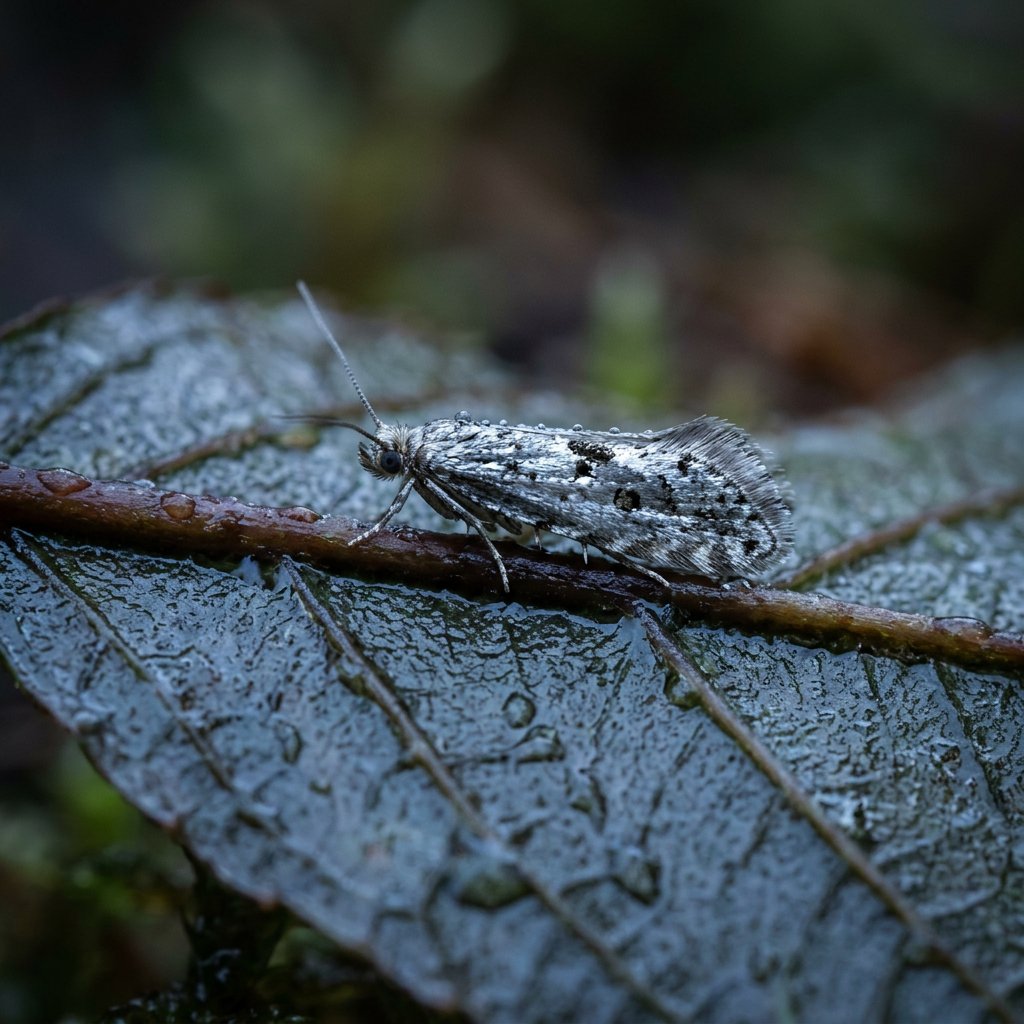
Often called the Buckthorn Leaf Miner, this tiny architect is more famous for its intricate construction projects than its appearance as a moth. While the adult is a subtle, silver-and-brown micromoth, its life cycle leaves behind fascinating "galleries" and "white hammocks" on the leaves of buckthorn bushes. It is a common resident of European hedgerows and gardens, quietly playing its part in the local ecosystem as a specialist feeder.
🔍 How to Identify
- 🌀 The Spiral Mine: Early-stage larvae create a distinct, very narrow spiral or "S" shaped gallery inside the leaf. These look like tiny, pale brown squiggles.
- 🛏️ Molting Pillows: Before it changes skin, the larva spins a small, circular white silken patch on the leaf surface. It looks like a microscopic "bed" or "hammock."
- 🛶 Ribbed Cocoons: The most striking feature—a white, spindle-shaped cocoon with sharp longitudinal ridges. It looks like a tiny, 3D-printed piece of jewelry stuck to a stem or leaf.
🌲 Habitat & Ecology
- 🍃 Specialist Diet: These insects are "host-specific," meaning they are only found where Alder Buckthorn (Frangula alnus) or Common Buckthorn (Rhamnus cathartica) grow.
- 🌳 Ecosystem Role: While their feeding can make leaves look a bit "skeletonized" or brown, they rarely cause permanent damage to the plant. They serve as a vital snack for small songbirds and parasitic wasps.
⚠️ Safety & Toxicity
- ✅ Status: Completely harmless.
- 🧤 Details: These moths do not bite, sting, or produce irritating hairs. They are safe for gardeners, children, and pets to interact with. If your buckthorn bush looks a bit ragged from their feeding, there is no need for chemicals; the plant will usually recover just fine.
✨ Fun Fact
The genus name Bucculatrix comes from the Latin word for "puffed out cheeks." This refers to the tufts of scales on the moth's head, which make it look like it’s perpetually blowing a tiny trumpet!
More Details








