Info
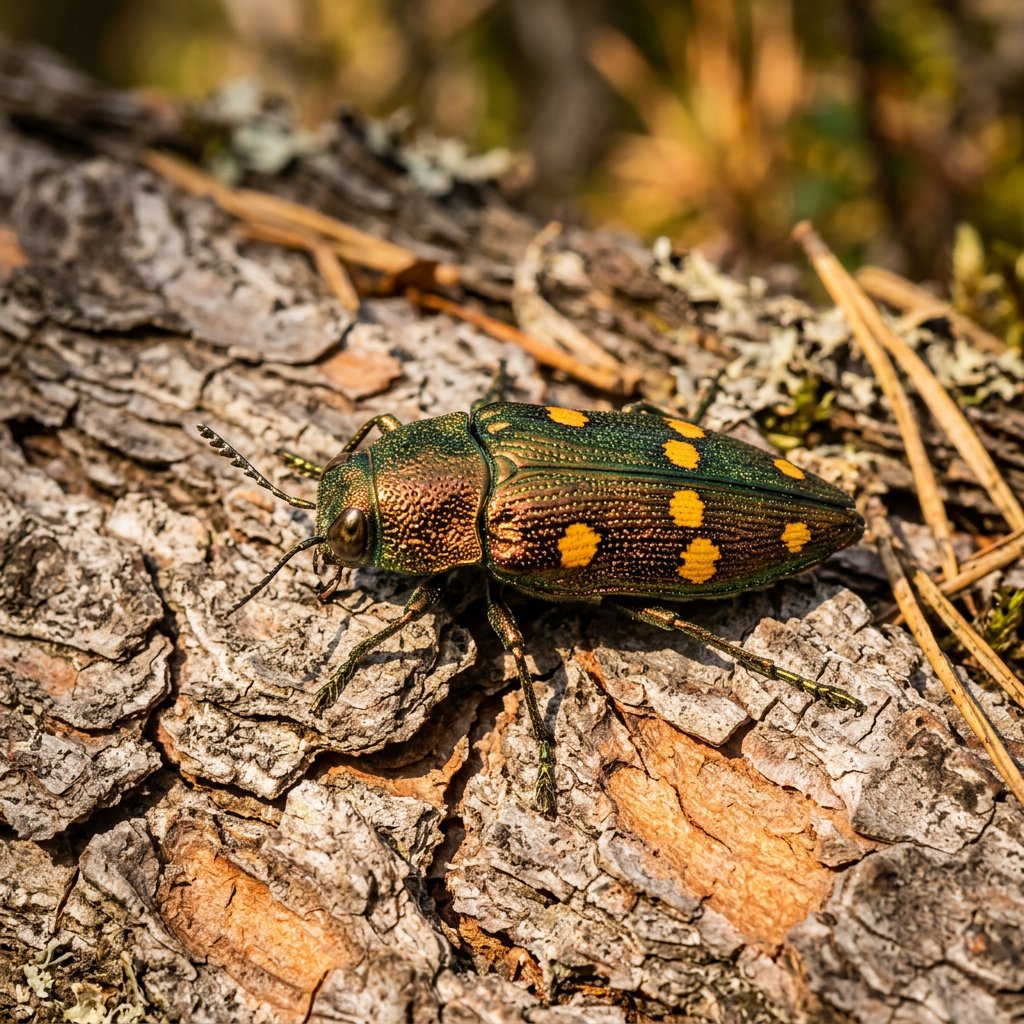
Often called the Eight-spotted Jewel Beetle, this insect looks like a living sapphire dropped onto a pine needle. Belonging to the Buprestidae family, it is celebrated for its stunning metallic luster and geometric patterns. While many wood-boring beetles are seen as pests, this particular species is a rare and beautiful find for any nature enthusiast walking through a sun-drenched coniferous forest.
🔍 How to Identify
- 🔵 The Shimmer: A deep, iridescent metallic blue or blue-green body that glints like polished metal under the sun.
- 🟡 The "Eight" Spots: Four distinct yellow or cream-colored spots are arranged on each wing cover (elytra), creating a symmetrical pattern of eight dots.
- 🚤 The Shape: An elongated, "boat-like" body that is characteristic of jewel beetles, tapering at the end with a sturdy, armored appearance.
🌲 Habitat & Ecology
- 🪵 The Pine Specialist: You will almost exclusively find these beetles near coniferous trees. The larvae develop inside the wood of dead or dying pines, playing a vital role in the natural cycle of forest decomposition.
- ☀️ Sun Lovers: Adults are "heliophilic," meaning they love the sun. They are most active on hot, bright days, often seen basking on fallen logs or tree trunks to regulate their body temperature for flight.
- 🍽️ Dietary Habits: While the larvae munch on wood fibers, the adults may feed on tender bark or pine needles, though they are much more focused on finding mates during their short adult life.
⚠️ Safety & Toxicity
- ✅ Completely Harmless: The Eight-spotted Jewel Beetle is a "gentle" insect. It has no stinger and its mandibles are not designed to bite humans or pets.
- 🛡️ All Flash, No Venom: Their bright colors are not a warning of toxicity (aposematism) but rather a form of structural coloration. They rely on their hard shells and quick flight to escape predators like birds.
✨ Fun Fact
The iridescent colors of jewel beetles like Buprestis octoguttata are not caused by pigment but by the microscopic structure of their shells. Because the color is structural, it never fades—even decades after the beetle has died, its shell will remain just as brilliant and blue as the day it emerged!
More Details








