Info
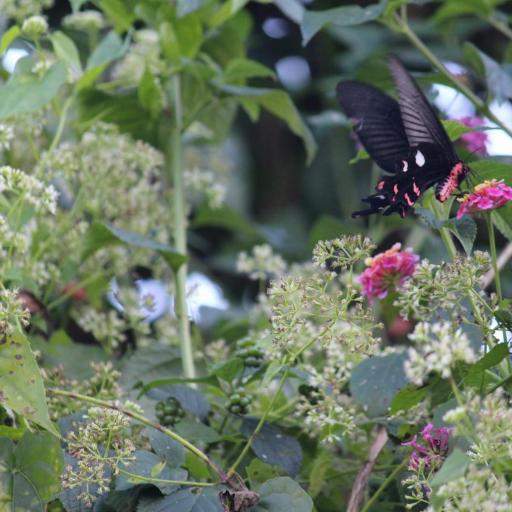
Known as the Common Windmill, this striking butterfly is a slow-motion marvel of the Asian tropics and subtropics. Its name comes from its unique, leisurely flight pattern, where its long, narrow wings flap with the rhythmic grace of a turning windmill. It is a classic example of nature’s "warning system," using bold colors to tell the world it’s much tougher than it looks.
🔍 How to Identify
- 🦋 Elongated Wings: Unlike the rounded wings of many butterflies, the Common Windmill has narrow, stretched-out forewings and long hindwings with distinct "tails."
- 🎨 High-Contrast Pattern: The wings are a deep, velvety black, accented by large white patches in the center and a row of bright, strawberry-red crescent shapes along the bottom edges.
- 🔴 Bright Red Body: One of its most defining features is its bright red abdomen and thorax, which serves as a biological "no trespassing" sign to hungry birds.
🌲 Habitat & Ecology
- 🍃 The Aristolochia Connection: This butterfly is almost always found near Birthwort (Aristolochia) vines. The caterpillars eat these toxic plants, absorbing their chemical defenses to become poisonous themselves—a trait they carry into adulthood.
- 💧 Forest Dwellers: You’ll typically spot them in moist, shaded forests, along riverbanks, or in wooded gardens. Because they are chemically protected, they don't feel the need to fly fast, often hovering lazily around nectar-rich flowers.
⚠️ Safety & Toxicity
- 🟢 Safe for Humans: The Common Windmill is completely harmless to people. It does not bite, sting, or possess any irritating hairs.
- 🚫 Toxic to Predators: Because of its diet, the butterfly is highly "unpalatable" (bad-tasting and toxic) to birds and small mammals. If a pet were to eat one, it might experience stomach upset, but the bright colors usually prevent attacks before they happen.
✨ Fun Fact
The Common Windmill is a "trendsetter" in the insect world! It is so well-protected that other, non-toxic butterflies (like certain forms of the Common Mormon) have evolved to mimic its colors and wing shape exactly, hoping predators will mistake them for the poisonous Windmill and leave them alone.
More Details








